The 10-day Gujarat Itinerary takes you to historical walks in Vadodara, Bhuj, and Ahmedabad.
This short trip is part of a 22-day trip to Gujarat and Madhya Pradesh. These cities are about 7 hours’ drive apart. Taking the night bus and night train is the only way to save time. I stayed in a homestay and budget hotels. I planned this trip to trace the footsteps of the Gujarati traders. Gujaratis were successful traders from the late 15th to the 18th centuries in the Indian Ocean. They were involved in trading textiles, ivory, coffee, and gold, and to an extent, they also participated in a small scale of the slave trade. Chhaya Goswami’s book on Gujarati merchants from Kachchh (Kutch) gives you an introduction to their world.
It’s not that everyone is vegetarian in Gujarat, but 70% of the population is. You will still find restaurants serving meat.
10 Days Gujarat Itinerary
Day 1 Arrive in Vadodara
Day 2 Vadodara
Day 3 Day trip to Champaner and night bus to Bhuj
Day 4 Bhuj: Historical Walk
Day 5 Bhuj: Markets and Old City
Day 6 Rann of Kutch and Aritisan Villages
Day 7 Handicraft Villages: Ajrakhpur & Bhujodi
Day 8 Day trip to Lakhpat
Day 9 Bhuj to Ahmedabad Bus
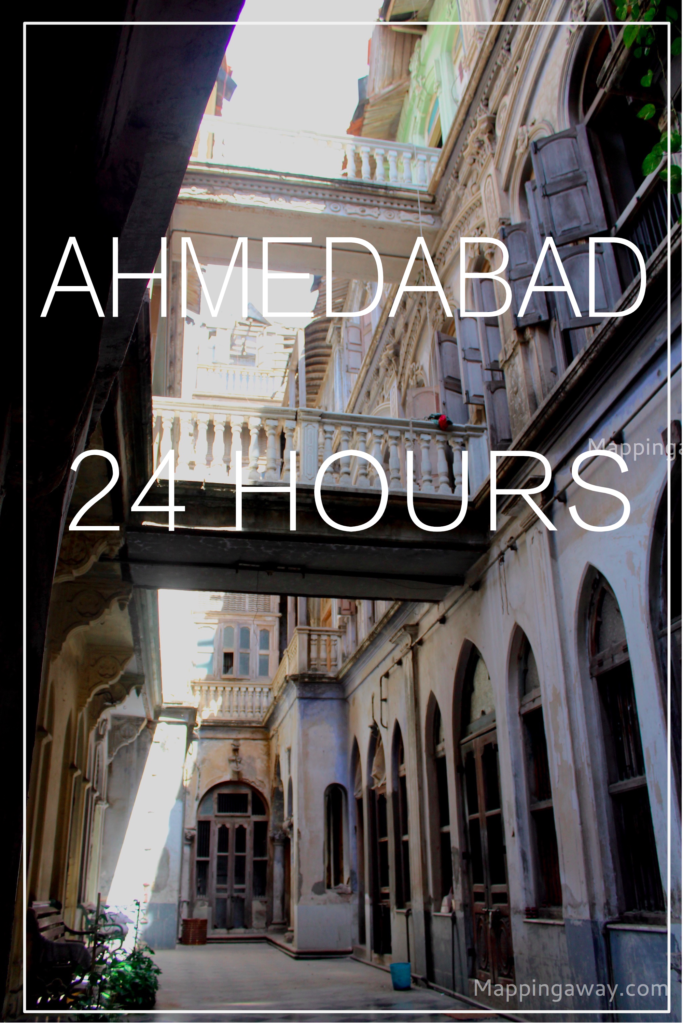
Day 10 Ahmedabad: Historical Walk
Top 5 Experiences
- Walk barefoot on the Great Rann of Kutch
- Historical walk in the labyrinth in Ahmedabad Old Quarter
- Imagine the glorious day in Lakhpat Fort
- Visiting Artisans around Bhuj, and taking a block-printing and fabric-dying workshop
- Fill your stomach with a Gujarati Thali
Best Time to Visit
October to February are the best months to visit. When the monsoon ends in late September, the fresh air drives in. It was hot in the noon, but still delightful to walk around the city. In February, Bhuj is already burning in the noon. These are the best months for outdoor activities.
April to June are not the best times to visit desert areas since the temperature rises to as high as 39 °C. It might be a good time for camping or visiting the coastal area.
July to September’s monsoon cools down the air a little bit. The wave is strong during the monsoon in the Arabian Ocean.
Getting Around
Flights
Ahmedabad’s international airport connects to many international airlines. And the domestic airport links to Vadodara and Bhuj. Only Air India from Delhi and Indigo fly to Vadodara from Bangalore, Chennai, Delhi, Hyderabad, Indore, Kolkata, and Mumbai.
Bhuj does not have an international airport. Only Air India operates domestic flights from major cities to Bhuj. Another nearest airport is Kandla, about 45 km away, and only Spicejet operates flights.
Find affordable flights around India on cleartrip.com or makemytrip.com
Bus
Daily bus runs between Ahmedabad, Bhuj, and Vadodara. An overnight bus is the best option to catch up on some sleep and arrive in the early morning. Sahjanand Travels and Patel Travels are recommended by Gujarat Tourism. If you travel on a budget, the state transport buses are an alternative to this.
Bus booking at Redbus. in
Train
Trains between Vadodara and Bhuj operate twice daily, and the others on a weekly basis. The Bhuj Ac SF Express is the fastest train that passes by Vadodara in the early morning, 4:50 am, and reaches Bhuj at 1:15 pm. The journey takes 8 hours and 25 minutes. The last train is the Kutch Express that leaves at 11:45 pm and reaches Bhuj at 9:25 am. Other than this, about 6 weekly trains are running on this route.
Bhuj to Ahmedabad is a 6 to 8-hour train ride. Sandra Terminus Ac SF Express operates on Monday, Thursday, and Saturday. It begins at 15:05 and reaches Ahmedabad at 22:10.
IRCTC is the Indian Railway Corporation. Register an account and book under the Foreigner Quota.
Make your booking at Cleartrip.com or 12go.Asia
Where to Stay?
The Gujarat Tourism Office shares a list of hotels and homestays across the state. It’s very convenient to find a homestay. I chose homestays at Bhuj and Vadodara from this list. You can call or email the homestay for availability.
Find your Homestay and accommodation at gujarattourism.com
Vadodara
Arudh Mahal Homestay is owned by Mr. Shital Vijaybhai Pawar’s family. The white-washed mansion is behind a busy street and within walking distance of the old quarter. (+91 99980 34545)
Madhav Bagh – Royal Heritage Stay, finished with Indian and modern design, provides a cozy and boutique experience.
Laxmi Vilas Palace
Bhuj
Mr. Labhashankar Keshavlal Joshi homestay is in Lohar Chowk, walking distance to the old city and the jewelry and fabric market. Prag Mahal Palace is a walking distance. (+91 9638236606/+919825000000)
The Bhuj House is the ancestral home of the Bhujwala family, with a Parsi origin, built in the 1860s. The house is about 2 km from the market, and is a home away from home place to stay.
Sharad Baug Homestay is owned by the grandson of the last ruler of Kutch, Sri Madansinhji. It’s in a quiet garden near Harmirsar Lake.
Kutir Craft Village Resort operates traditional huts made of mud with colorful patterns in the interior. If you come with a car, this is a place to stay away from the city for a village experience. (+919879432076)
Ahmedabad
Deewanji ni Haveli is tucked in the old city neighborhood, about 5 5-minute walk to the Old Stock Market in Ahmedabad. Heritage House in Ahmedabad is in the same neighborhood, about 10 10-minute walk to the old Stock Market.
French Haveli offers rooms from several havelis in the old city of Ahmedabad that offer a unique experience with their decor.
Day 1 Vadodara
Vadodara was a former Indian state ruled by the Gaekwad Dynasty for 200 years.
Things to Do
Nava Bazar
Raopura Tower
Shree Kathiyawadi Khadki for Kathiawadi thali
Boutiques Shops
Baroda Print
Sejal Handicrafts
Seasons Apparels

Arrived in late afternoon, it was still bright daylight. I explored the bustling Nava Bazar and Raopura Tower, which are on the same street, about one kilometer away from each other.
Nava Bazaar is just a small part of the commercial hub that revolves around the Shiva Statue lake and stretches to Mandvi Gate. At the opposite end of the lake is the Kanherao Market. You can explore these two landmarks on Day 2.
Presumably, you end your day at Raopura Tower, walk to Shree Kathiyawadi Khadki for Kathiawadi thali. Kathiawadi is a cuisine of the Kathis. The Southern Gujarat area, which uses main cooking ingredients, potatoes, eggplants, and jaggery etc., does not use many leafy vegetables.
DAY 2 Vadodara: Things to do
Places of Interest
Lakshmi Vilas Palace
Old City Gates
Khanderao Market
To beat the crowds and hot sun, be the first one to visit the Lakshmi Vilas Palace at 10:30 am. Built by Maharaja Sayajirao Gaekwad III in 1890 in the Indo-Saracenic revival style, the lavish palace begins the tour at the lawn and offers a good view of the palace. Take the audio guide!
Lunch at Mandap for a Gujarati Thali. If you crave South Indian thosai/dosa, visit Milkton’s South Corner.

Old City Vadodara
The old city is marked by four entrance gates in each direction as part of the extinct fort “Kila-e-Daulatabad”: Lehripura Gate, Geni Gate, Champaner Gate (North)  , and Pani Gate (East) . Lehripura Gate is considered the most embellished gate, with elaborated balconies.
Tip: Book an Ola (India’s Uber) or an Auto rickshaw to any of the gates to begin your old city tour.
Heritage Walk: Open vadodarabyfoot.com in your phone, follow the recommended route that is accompanied by English audio.
Follow Me
I began my tour from Mandvi Gate, which is not a gate but rather a pavilion. During my visit, the gate served the purpose of a prayer place. A statue of gods on the pooja mandir, “prayer cupboard,” devotees circled, waiting for a chance to pray. Mandvi Market is a place for traditional leather footwear that you find in Bandra, Mumbai, at a lower price.
It is said that the Jama Masjid used to host Asia’s biggest Quran, written by the saint Mohammed Ghauz in the 18th century, but it has been transferred to Darul Uloom Seminary. The Masjid is tucked in the row of shops in an alley that could easily be missed, yet the decorative Islamic carving on the entrance gate might make you look twice.
Khanderao Market
If you are tired, take an auto-rickshaw to the market. The market was completed in 1906, and the ground floor is for vegetable and fruit markets, located in the courtyard. You can walk to the courtyard and look at the structure of the market.
Snacks
Walk down to Canara Coffee House for a cup of thick milk tea. If you are in the Khanderao Market area, walk 650 meters to Shri Guruprasad Restaurant for Jamun ice cream (seasonal) and stuffing dosa. Visit Jay Mahakali Sev Usal for some signature snacks, sevsal.

More Days in Vadodara?
Tambekar Wada is a three-story building in a wada style (North Karnataka and some parts of Maharashtra) built around the 19th century. The Wada preserves some of the colorful story panels painted in various styles.
Jews were hired as soldiers by Maharaja Sayajirao Gaekwad III since 1850. A historical graveyard is known as Yehudi Kabristan in Nizampura. The cemetery, unfortunately, has had its historical value neglected.
Day 3: A Day Trip to Champaner

Places of Interest
Hike to the Mahakali Mata Mandir, follow the donkey caravan
Jami Masjid
Nagina Masjid
Sahar Ki Masjid
Citadel walls
Setting Vadodara as a home base allows taking day trips outside of the city. I checked out of my homestay and left my backpack there. Champaner Archaeological Park can be explored on foot and by public transportation. I took a public bus from Vadodara Central Bus Station. I took the bus that leaves around 7:30 am and arrived at 9 am. It’s better to arrive early to beat the heat, and it’s a long day to be here.
In Champaner, I used a shared auto-rickshaw to hop around the sites. Only one main road, so it is convenient to hop on and off a rickshaw. I finished the tour at 3:30 pm and returned to Vadodara at 5 pm to catch the bus to Bhuj.
How to Get There?
Car
It would be a hassle-free trip to Champaner if you hire a car or go on your own. The major points are near the bus stop. Some of them are scattered around the area.
Bus
If you are a budget traveler, public transportation is the best option. The bus leaves every half an hour from Vadodara Central Bus Station to Champaner. The ST (State Transport) Bus to Pavagadh takes about 1.5 hours. Many pilgrims come to the Mahakalika Mata Temple. Booking is not required.
Get Around by Walk or Auto-Rickshaw
Champaner is walkable to the major sites and the only village. Otherwise, an auto rickshaw is the only option available for sharing or hiring to Halol.
Where to Eat?
Halol, the major town, is about 7 kilometers from the archaeological park. Small eateries and tea shops are around the bus stop and in the village. It’s recommended to bring your water and snacks.


What to See?
Mahakali Mata Mandir
At 9:30 am, already climbing up the stairs to the temple with a small crowd. The temple hosts the goddess Kalika. It is about 5 kilometers from the bus stop Pavangdh. Hop on shared transport with the pilgrims that goes to the Pavagad Fort’s Entry point.
I enjoyed taking the steps uphill greatly. Donkey caravans climb up to deliver goods to temple stalls. On the stairs, many stalls sell prayer goods. Many red prints on every step. Ruins in the mountains.
Ropeway is another option accessible from the entry point, which takes you to the hilltop station, where there are many shops selling prayer goods. The temple is built on the highest point of the mountain. A long queue walks slowly up to the temple. From the highest point, a panoramic view of the old kingdom.
Upon your return to the Pavangdh bus stop, enjoy a cup of chai at the food stall and some snacks.

Champaner-Pavagadh Archaeological Park
A historical city founded in the 8th century by Vanraj Chavda, king of the Chavda Dynasty. There are 114 monuments in the area. If you come in a car, you might be able to visit most of them, such as Ek Minar Ki Masjid, which is tucked in the surroundings of a forest.
Opposite the main bus stop is the entrance to the park. Get a ticket from the park ticket office to begin your tour. Ruins of citadel walls and a large arched entrance welcome you to the heritage site. Villagers fly through on a motorcycle. This takes you to the private mosque of the royal family, Saher-Ki-Masjid .
Metal direction boards point to each heritage site along the way to Jami Masjid . This small village has three streets. See the cow begging for food standing outside the villagers’ home. The extravagant relief mixed with Hindu and Islamic design, and the great dome, make are most worthwhile to spend time walking around the mosque. Against the landscape of the area, the green garden is well-maintained with lush green grass and pink flowers. You could pick a nice stop to rest and stare at the monument.
There are several basic guesthouses in this village and in the main town. If you prefer to stay back and explore the historical architecture.
Where to go next?
Khambhat was once a flourishing trade city. It was mentioned in Marco Polo and Ibn Battuta’s travelogues between the late 13th and 14th centuries, respectively.
Day 4 Bhuj: Historical Walk

This basic four-day guide scratches the surface of Bhuj and its surroundings. Kutch holds a special corner in every visitor’s heart.
As the capital and commercial hub of Kutch, Bhuj has expanded beyond its fort wall. I spent two days walking around the city. I’d say only the old city area is great for walking, but it’s easy to get lost in the labyrinthine, narrow lanes.
Kutch has a rich culture in art that makes it famous for handicrafts such as block-printing, embroidery, and leather work, as well as music and dance. Some skills are passed down through generations, and the youngest family members are working to preserve the legacies with innovation.
Places of Interest
Prag Mahal Palace
Aina Mahal
Gates
Bazaars
Historical Walk
The walk begins from Darbaar Gadh, aka the palace complex. Protected by fort walls, Prag Mahal Palace and Aina Mahal Palace show a great contrast in architectural style. Aina Mahal, aka Hall of Mirrors, built in the 18th century, some parts of it were destroyed in the 2001 earthquake. The Prag Mahal is a 19th-century palace. Look up to the fort wall as you walk down to Darbaar Gadh, and Toraniyu Gate welcomes you to the complex. Find the two angles of relief on the gate.
Outside of the palace compound, in less than 10 10-minute’ walk, you will get to the Gujarat Pollution Board building . The purpose of this building has two versions, but it was a school earlier. Fateh Mohammed’s House stands alone in a deserted garden, which was built in the late 18th century after he rose to be the “Diwan” in 1786. Although the house is locked, look at the window and wall ornaments. It’s said that he is buried behind this house.

In 100 meters, Patwadi Gate is on your left side. Walk around Harmirsar Lake, but the lake waters dry in wintertime. Locals like to sit on the lake bank and hang out here. Many fast-food vendors line up here. In a big garden, there stands the SharadBaug Palace. A small part converts to a museum.
As you cross the bridge, you will notice a fort tower and a tall white-washed minaret enclosed in. That’s Mohammad Pannah Masjid, one of the oldest mosques in Bhuj. The entrance is behind Mahadev Gate.
Continue the walk to Mahadev Gate . I had enough for today.
Find a teashop for rest and enjoy a cup of chai! Tomorrow will take you to the markets of the old city.
Where to eat?
- Pooja Dining Hall for vegetarian Gujarati thali
- BINHARIF Dabeli Wala for dabeli

DAY 5 Bhuj Old City and Markets
Places of Interest
Vegetable Market Building
Bazaars
Livelihoods created outside of the Darbaar Gadh. I began my tour from the Old Vegetable Market . Not surprisingly, the market inside is not crowded as many vendors are outside of the building.
Bhuj is not my final destination; I can only buy small items that fit into my backpack. Silver jewelry is a good option. Saraf Bazaar Rd is famous for jewelry and other silver lifestyle commodities. Piles of new and vintage embroidery tucked in small shops. Explore the side streets; you might find something you like.

Usually, families come together to shop for jewelry. As I was walking down, the enormous nose ring worn by Jat women and her heavy silver necklace caught my attention. It’s comparable to the Harijan women’s spiral necklace and enormous anklets.
SIDR Craft has one of the finest Bandhani (tie-dye)collections owned by Abdul Jabber Khatri and his brother.
Where to eat?
Walk to Farsan Dunia for popular Indian sweets.
Noorani Restaurant serves tandoori and North Indian food.
Day 6 Around Bhuj: Great Rann & Villages

Rann is a salt marshland close to the border with Pakistan, inhabited by many communities. So often to see the herbs of camels, buffalo, and goats crossing the highway guarded by local women or men. During the monsoon season, the desert is buried in water. Full moon in Rann is an exceptional beauty. Glitz deserted land under moonlight.


How to Get Around?
Option 1: I’d recommend that you arrange a driver or guide for your trip to Rann of Kutch and Khavda, Hodka, and Nirona; it’s a package on request. Experienced drivers know all the artisans’ homes; you have to remind them if you want to visit some artisan centers. Usually, drivers’ English is limited to professional usage.
I booked a driver with help from the homestay to visit the Lakhpat fort and the Rann of Kutch, about 2000 INR a day (civic). Each trip takes up a whole day. I set Bhuj as my travel base. If you are on a tight schedule, it would be better to move from destination to destination than to set a travel base. You will see more of the Gujarat coast.
Amazing Kutch Tourism +91 99747 33551
Laxmi Tours and Travels +91 94261 36955
Tip: It might take you a few calls to get a driver for the next day. Book early.
Option 2: Scooter Rental
MK Auto
Permits
White Rann Permit Office
Carry a copy of your passport & the original
Rann of Kutch

Mohammed, my driver, picked me up in the morning at 8:30. On the way to Great Rann, we stopped by Khavada village and a few tea shops. Mohammed made sure I tried the Mawa cake made out of boiling milk at Bhirandiyara. Great Rann is a heat-up oven in February at noon.


Villages
Villages are like open art galleries. Artists work in an open-door studio. You can engage with them.
Beginner’s Guide to Artisan Villages I
Sumeraser
- Kala Raksha
- Tana Bana
Khavda : pottery/ Ajrakhpur
- Bhilal Khatri – block printing
- Damabhai Marwada – rug weaver
Nirona : Rogan Art/ Copper Bell


Nature & Wildlife
The Banni and Chhari Dhand is the place to see migratory birds during the monsoon.
Khadir Bet Flamingo City (Surkhab Nagar)
Day 7
Around Bhuj: Artisan Villages
Beginner’s Guide to Artisan Villages II
Tip: It’s recommended to make an appointment before the visit. Artists’ studios share space with living quarters.
Bhujodi Village
weaving
- Vankar Vishram Valji
- Babubhai Ratansinh Vanodia Vankar – ask around for his home
- Handloom Design Center
- Shrujan
- Haria Laxmi Craft Park
Ajrakhpur
- Ajrakpur Studio / Dr. Ismail Mohammed Khatri
- Sufiyan Ismail Khatri
- Real Handicrafts
- Khabbab Khatri
- Khamir offers workshops and hosts exhibitions. They operate a guesthouse where you can stay, and an online retail store.
- ASK Handicraft
- Somaiya-Kalavidya offers various textile workshops


How to Get There?
Option 1: Hire an auto-rickshaw for one day from the Old Railway Station Road
Option 2: Take a shared auto-rickshaw from Old Railway Station Road. It’s cheap to do it this way. You are free to explore the villages. The con is a long waiting time for a shared auto-rickshaw to the next village in the hot sun and dusty highway.
Bhujodi village is about a kilometer away from the entrance. A rickshaw is for hire for 50 INR.
Option 3: Catch a local bus toward Ahmedabad and ask the driver to drop you at Bhujodi.
Handicraft Tour
Tour is one of the best ways to experience and learn the making process while engaging with artisans.
- Open Studio Tour by Somaiya Kala Vidya organizes a tour to Bhujodi and Ajrakhpur
- Kutch Adventures India
- United Artisans of Kutch
Day 8
Around Bhuj: Lakhpat Fort
Places of Interest
Lakhpat Fort
Lakhpat Gurudwara Sahib
4 Gates 2 windows
Custom House
Pir Ghaus Muahmmed’s Shrine
Narayan Sarovar

It’s about 3 3-hour drive from Bhuj to Lakhpat. The road is relatively quiet, with villages on both sides of the road, and many herbs crossing the road.
Once a prosperous fort for a short period in the 19th century and a deserted fort now, Lakhpat was built by Fateh Mohammed. The fort hosts three religions, namely Hindu, Islam, and Sikh, which manifests the diversity of the traders and laborers.
On the far edge of India’s Arabian Sea, only 30km to the border with Pakistan, ships arrived from Sindh, East Africa, and other ports of India unloaded goods in Katha Varo Gate, then transported to the fort through Bibidullah door, guarded by two soldiers’ status. Katha Varo Gate is no longer accessible nowadays. The main gate’s remarkable height of an arch built for camel caravans.
The earthquake that occurred in 1819 changed the flow of the Indus River and brought about the fall of Lakhpat. A vast marshland is seen beyond the fort walls and guarded by border police today.
The fort is too big to walk from gate to gate. Your driver will take you by car to the places of interest.


A long shot of Pir Ghaus Muhammad’s shrine, who was a Sufi saint and Syed of Lakhpat. The caretaker of the shrine has been passed down for generations.

Lakhpat Gurudwara Sahib was built in the 19th century to commemorate Guru Nanak. He visited Lakhpat before embarking on his second and fourth journeys to Mecca. His relics consist of a pair of wooden sandals and a palkh, which are protected in a glass box.
The Gurudwara offers food and accommodation to visitors.
We end our tour with a simple lunch here.
Continue your trip from Lakhp. at
Jakhau was once a port and is now a fishing village.
Mandvi was a summer destination for the Kutch royals. It’s known for the beach. It was a thriving port from the 18th to the 19th century. Must visit Durgapur for its temples and merchants’ houses.
Day 9 Ahmedabad
Places of Interest
Sidi Saiyyed Mosque, Teen Darwaza Jama Mosque, Neighborhood
Direct bus from Bhuj to Ahmedabad is convenient, takes 7 hours or more with traffic. I only have a few hours left before sunset to explore. I chose the places close to my stay. Teen Darwaza is on the eastern side of Bhadra Fort, built in the 15th century. In 200 meters is where the 15th-century-old Jama Masjid to be found. The extravagant carving on the minarets that you still appreciate today. Auto-rickshaws are speeding through the crowd.
Tip: Bring a scarf and dress up modestly to visit important religious sites.
Walk another 250 meters to Chandravilas Restaurant for some famous Indian snacks and freshly made jilabi and fafda.
Day 10 Ahmedabad: Historical Walk
This guide takes you to some major temples and house clusters.
Plough the intricate narrow lanes of Ahmedabad’s old city, the living museum exhibits its rich history of maritime trade, conveyed through its lavish houses. These houses are either still occupied or locked up today.
Ahmedabad’s old city consists of 360 pols. Pols are clusters of houses that make up a small neighborhood. Inhabitants are not related to everyone and do not all share the same religion.
I’d recommend you to book a 2.5-hour tour with Historical Walk if you’re keen to learn more about the heart of the city.
Tip: Many of the places of interest are not listed on Google Maps. Ask anyone, and they will point you in the direction. Some pols connect to the main road following small lanes. You will derail your plan.

As early as 9 am, I began my tour from Old Stock Market (1) , which is where Manek Chowk (3)is located. Stack up of tables, the market is very much empty. Behind the Stock Market, Rani no Hajiro is a complex of tombs of Ahmed Shah’s Queens. Mahurat Ni Pol (27) is on the same market. You will see a blue plaque. Chandla Ol is an old market for brass pooja items. In 120 meters on Gandhi Street, you will find many bookstores under a bridge. That’s known as Fernandes Bridge (7).


Astapad Jain Derasar (10) was erected in a dense Doshiwada Ni Pol (9) in the 19th century. Its highly ornamented carvings are stunning. On the right corner of this block, a 180-year-old Harkunvar Baa Ni Haveli features unique Indo-Chinese elements – dragon ornaments. With 60 rooms, it makes it the largest haveli in the old city. I just stared at the balcony.
I already lost myself here. Get some snacks and tea!


I walked to Chaumukhji Ni Pol for Dodhia Haveli, which has been converted to a guesthouse now. The entrance pillars and the splendid motifs carved are worth walking here. Some famous Jain temples on this walk include Shantinath Jain Derasar and Ajitnath Bhagwan Jain Derasar.
Maybe you think you have to go to Adalaji to see the stepwell. Amritavarishini Vav is on Ghandi Road, 1km from Chaumukhji Ni Pol.
My final destination is Shree Swaminarayan Mandir Kalupur, and Noorani Bara Handi looks a little shady from the outside; it serves delicious varieties of kebab and other tandooris. Azad Restaurant & Corporate Sweets, Zaveriwad, is a place for sweets and snacks, but also serves vegetarian meals.
Useful Information
Download the Ahmedabad Old City map
List of Havelis
Day Trip from Ahmedabad
The Dawoodi Bohra community contributed to some colorful havelis in Siddhpur .