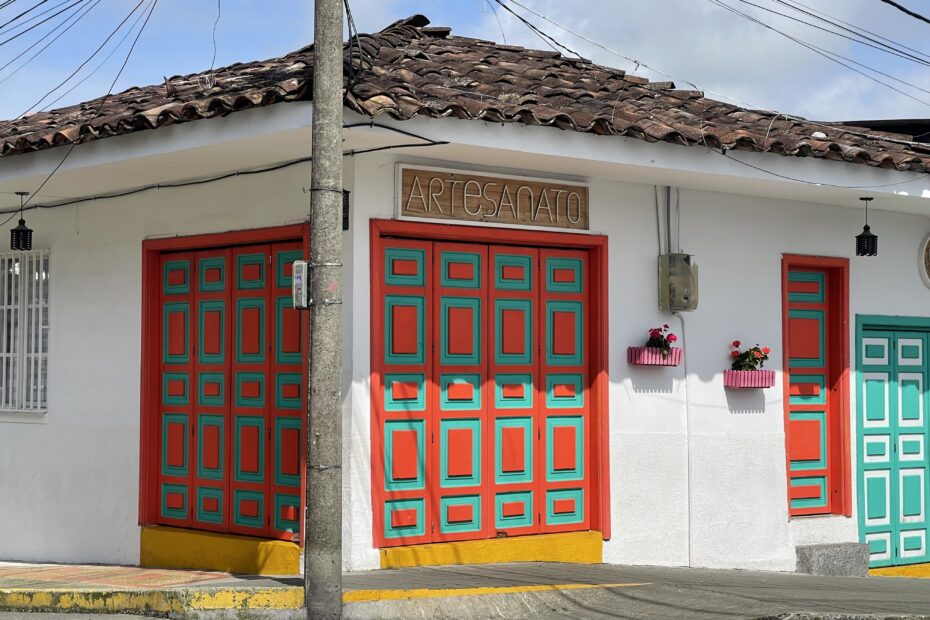
This post shares a simple guide to exploring the surroundings of Filandia and immersing yourself in rural life by staying in a farmhouse. Filandia is part of our 10-Day Scootering Colombia’s Coffee Region trip. It’s only 28 KM from Salento to Filandia. Filandia can be visited on a day trip. We left for Filandia a little after breakfast. It is always at the back of mind to avoid afternoon rain. After Highway 29 takes the turn in Las Cruces, the 7.3 KM road to Filandia is bumpy. I found Filandia is quieter than Salento, which still has the vibe. The vibrant colors of buildings on every block make the two-color church in blue and white recognizable in the main plaza. The small town offers a few great gastronomic choices. We had lunch at “La Casa Rosada,” and I loved their Marranitas de Helena. It seems to be a popular dining place with an English menu. This is what I missed while not staying in town: a variety of food and enjoying the bustling town. This also means that we get to explore the different side of Filandia.
April is the rainy season!
April to November are the rainy months! It usually rains in the afternoon. Sometimes it starts pouring, and sometimes it just drizzles. Don’t forget to bring a pair of hiking/waterproof shoes, a rain jacket, extra shoes/ socks, and quick-dry clothing. During the rainy season, it is humid, and clothes don’t dry fast.
Carry Cash
Most places take credit cards. I would still carry cash with me. Exchanging currencies in the airport is the easiest, unless you find a better deal on the streets. ATMs are available in Salento and Filandia, and in big cities, but not in villages. Some individual farm lodges prefer cash.
Itinerary
3 Days in Filandia: Salento to Filandia 21 kilometers
Day trip to Quimbaya: 17 kilometers
Where to stay?
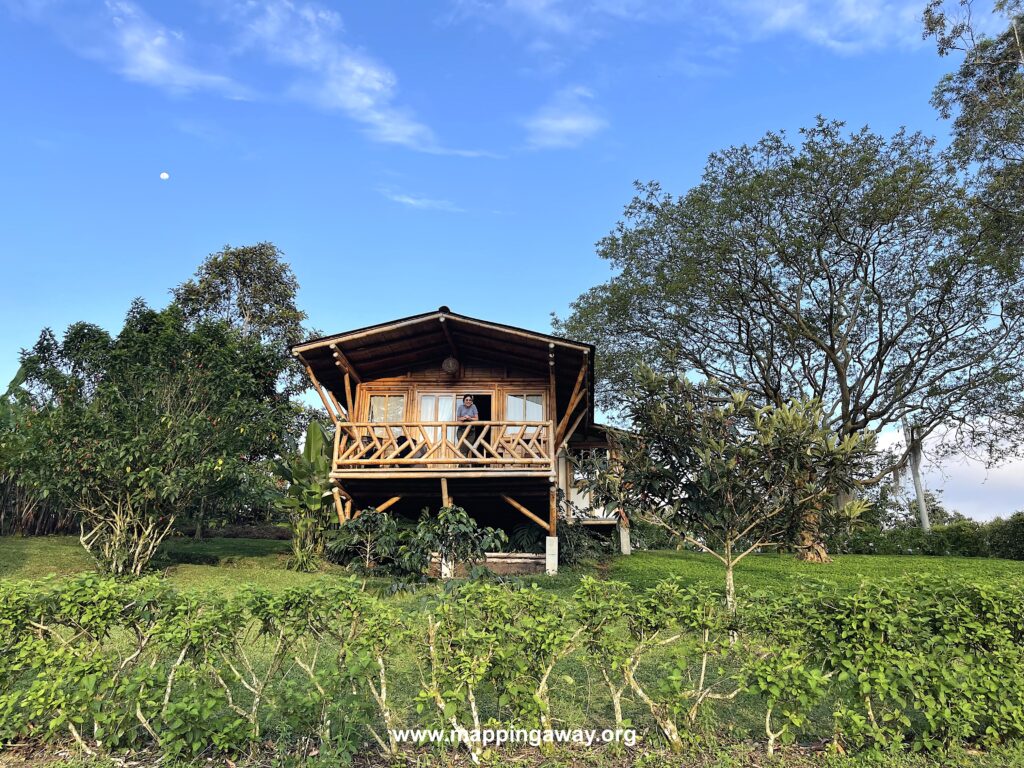
There are many budget guesthouses in town, as well as lodging in coffee farms. I am not worried about booking a week in advance. We reserve as we go. Casa Laureles, 5.7 KM from Filandia, is a well-maintained and simple coffee farm estate. The annex room with a balcony and a cabin is made out of bamboo. A bamboo garden is not far from the farm where the water stream flows. We stayed in the cabin for $240,000 COP per night / $63 USD. The owner, Gloria, prefers cash, and paying by card is subject to a transaction fee from the merchant. How do you make a reservation? WhatsApp is the best communication app to make a reservation. She is prompt at replying. Don’t forget to tell her if you prefer to have dinner.
Experience Local Farm
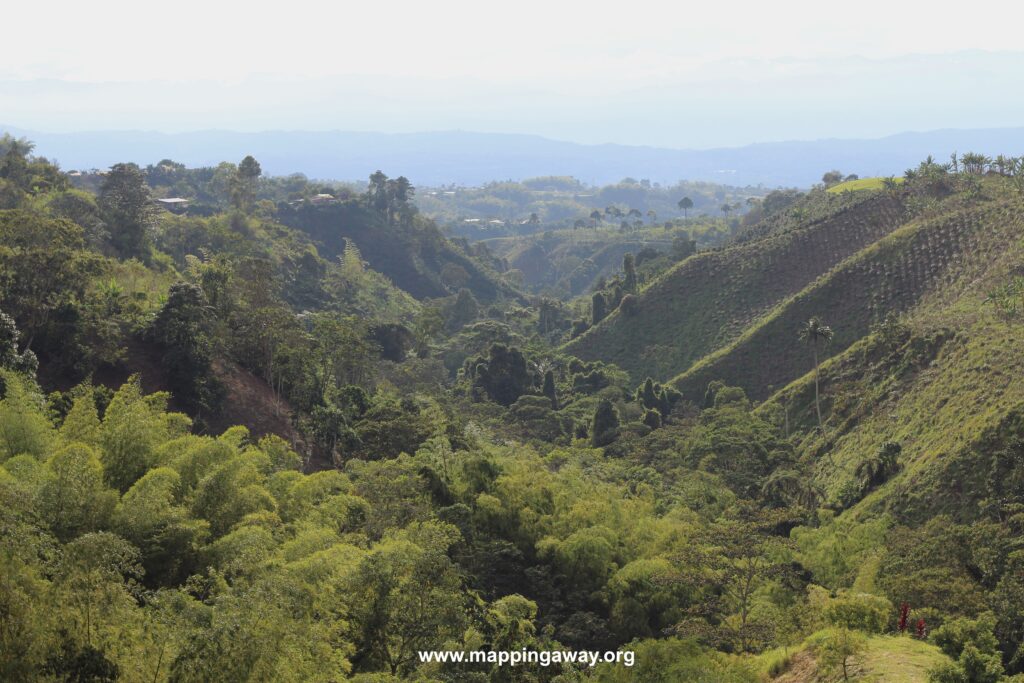
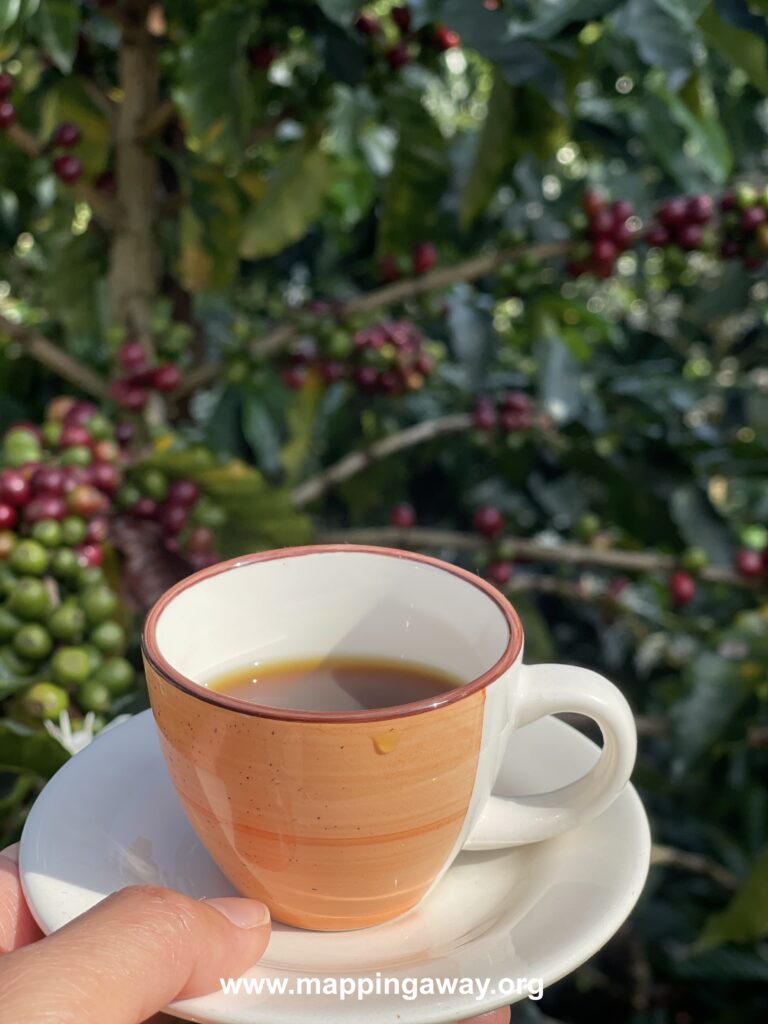
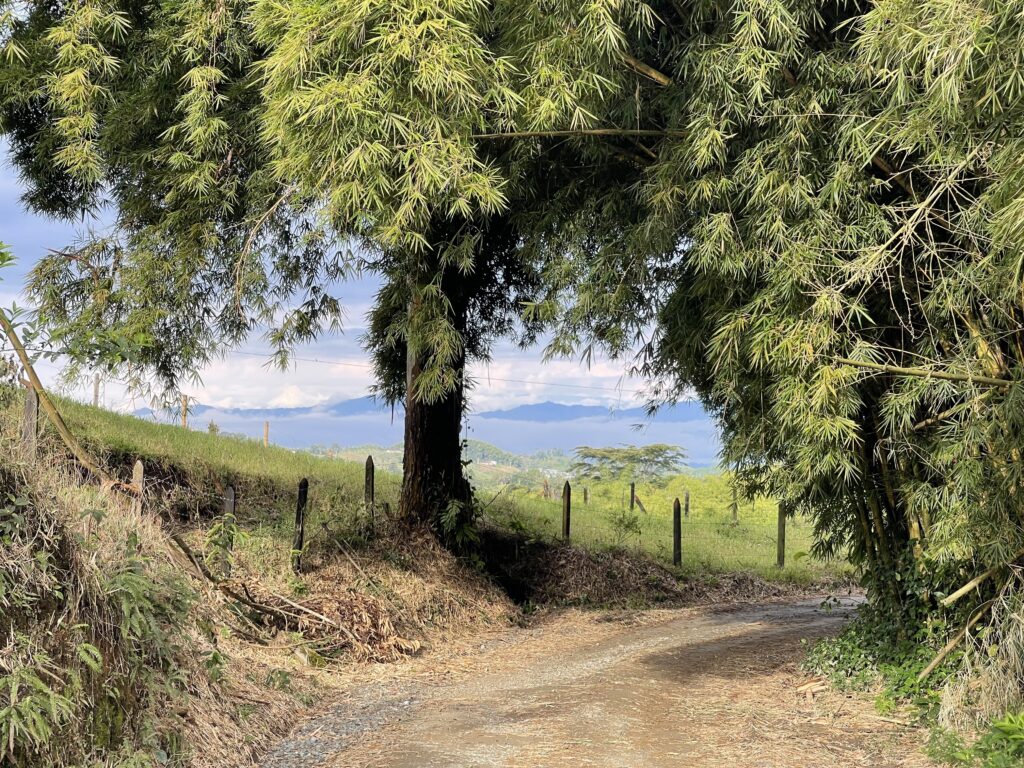
Staying in a farmhouse has given us the chance to quietly observe Colombian farming practices and sweeping landscapes. When being asked if the coffee gets exported, Gloria told us that it does not, only for the local market. Sipping morning coffee as we wander through the coffee plants perfectly captures the true farm-to-cup experience. The coffee is said to be organic and roasted at medium heat, with a hint of chocolate and fruit. It is common to spot cocoa trees, banana trees, and other fruit trees like guava around the farm. At the far end of the farm, a dense thicket grows in the gully separating the hills. On the horizon of rolling hills, the coffee plants dot the fields in perfect uniformity.
The cabin is surrounded by the farm, flowers, and plants, which face the main road. Case Laureles, the third farmhouse at the end of the road, is in a secluded location where only birds, dogs, cows, and farming machines are heard. In the morning, waking up to the chirping of Yellow-headed Brushfinch, parrots, hummingbirds, and tanagers, etc. I am not an expert in bird-watching, so Merlin Bird ID helps identify birds, as Colombia has the greatest variety of birds on earth. The cabin has a small kitchen where you can prepare something simple. However, it does not have kitchen staples, like salt, oil, and pepper. The cabin balcony offers a lookout to the rolling hills while enjoying your coffee and breakfast.
It’s not the berry-picking season, yet bright red and yellow berries peek out from beneath the coffee leaves. Maintaining the farm is a daily chore. Workers are coming to the farm for daily maintenance, and on the other side of the hill, farmers have been cutting grass since the morning.
After breakfast
After breakfast, take a walk to the water stream and the bamboo garden. It’s a slow-flowing stream, but you can hear it calmly passing by the brushes.

What to eat on the farm?
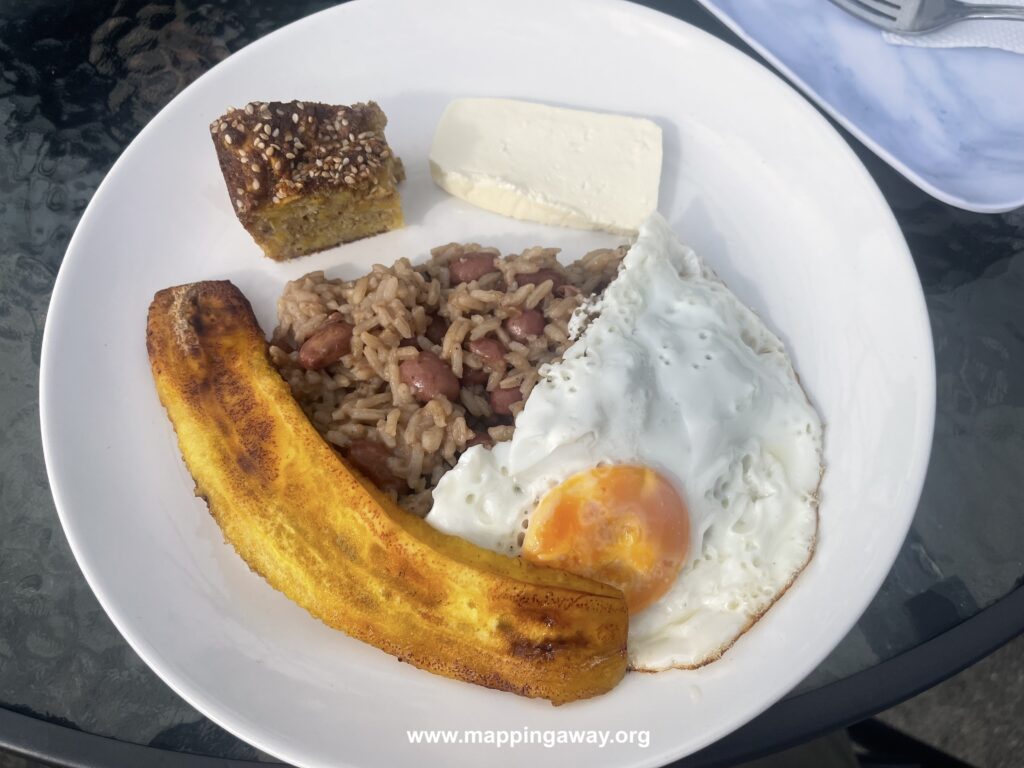
The farm serves breakfast and dinner, but dinner must be reserved earlier. The breakfast is simple, stable food that consists of eggs, sausage, rice, beans, and cheese. When your cup is empty, and you want another cup, ask Gloria, and she will happily refill it. Dinner is usually stir-fry vegetables, protein, and rice. It’s all prepared by Gloria and her helper.
Evening Walk
We don’t drive to town in the evening. It is beautiful to watch the sunset from the balcony and explore the neighborhood.
Filandia Town
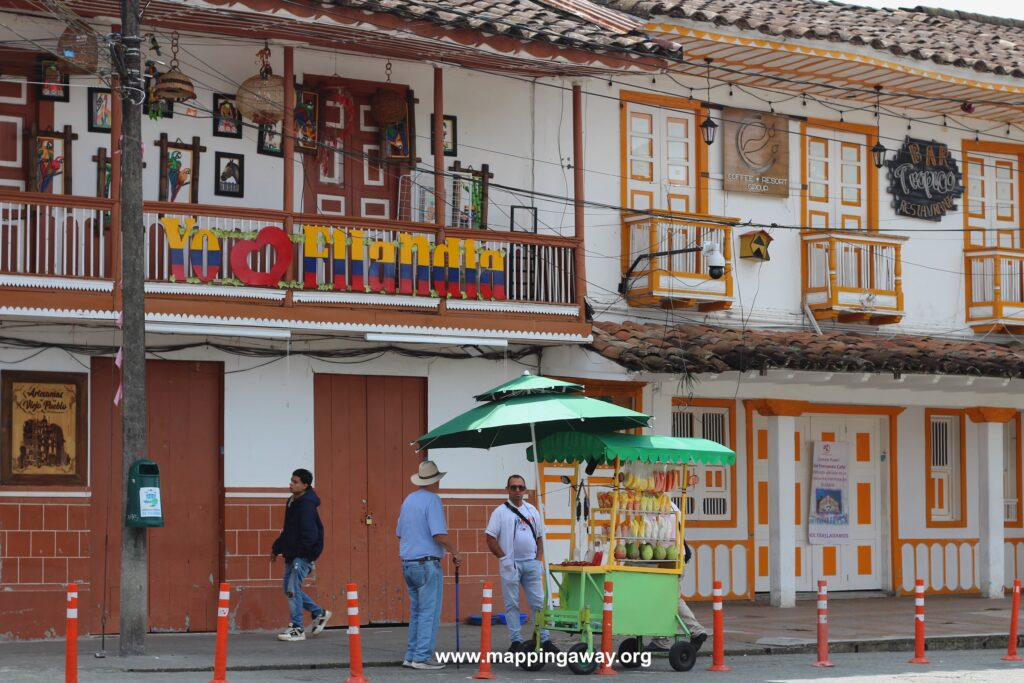
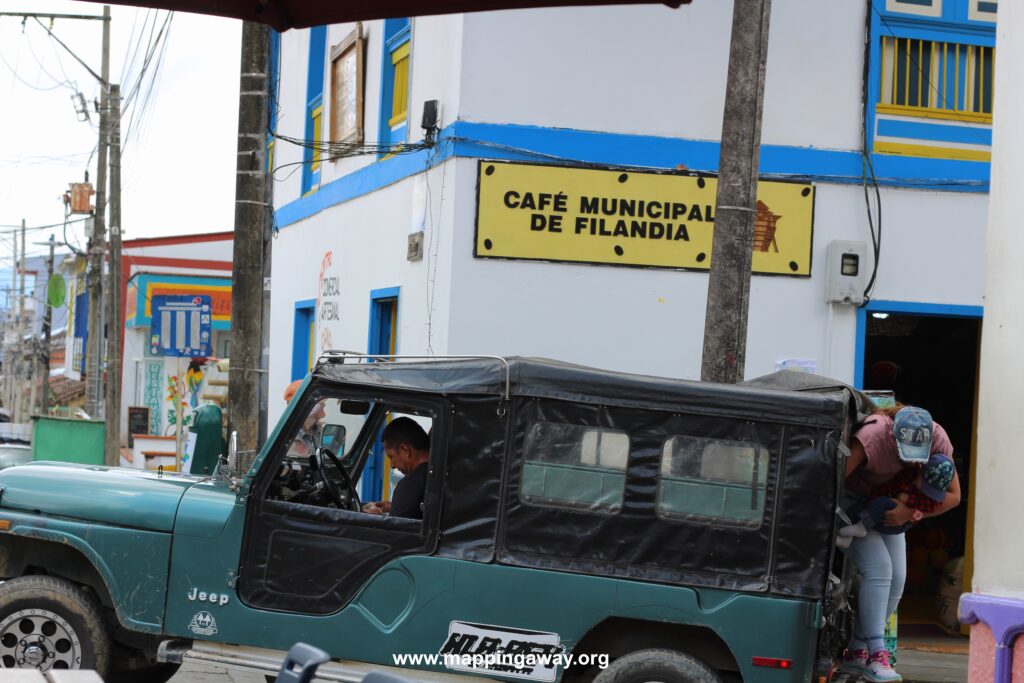
Filandia is pleasant to walk around in. The town is built on the hills, and the Mirador Colina Iluminada, a wooden tower, gives an overlook of the mountains. In the corner of the plaza, it is not possible to miss the bright logo of Café Municipal de Filandia. It carries a great selection of coffee from the region. Go in to smell a good variety of coffee beans and get a cup for 2,000 COP. This is just an introduction to the coffee of the region. Many small and modern cafes in town, the best for coffee hopping.
Day Trip to Quimbaya
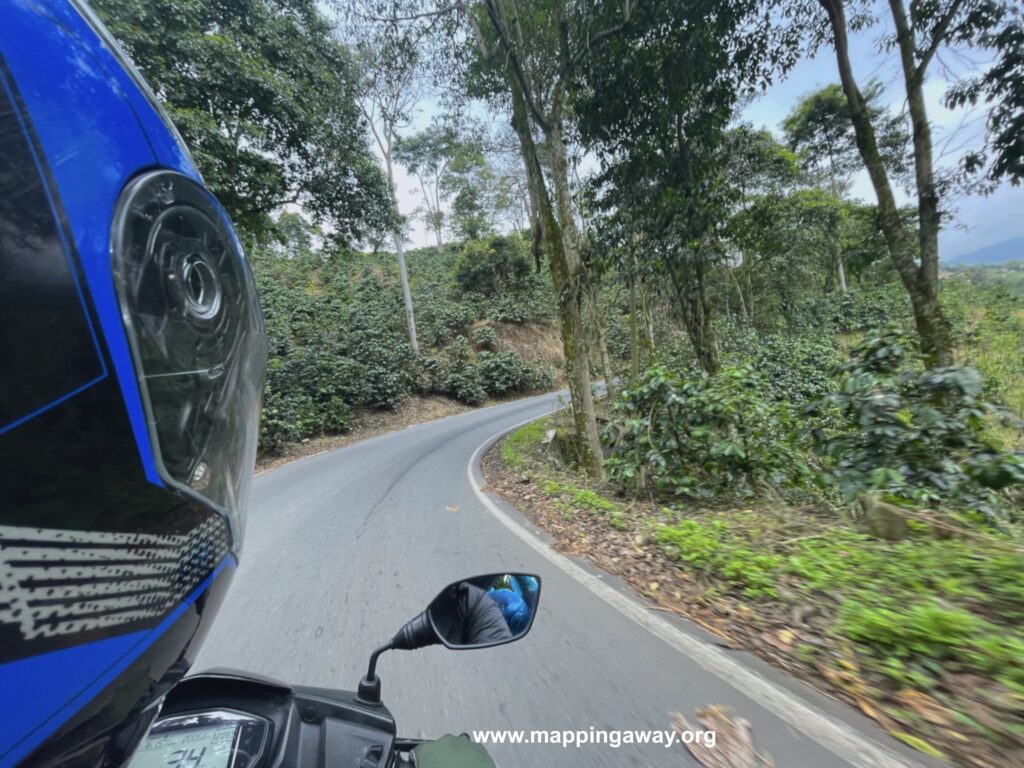
A day trip to nearby towns is usually less than an hour, passing by many small villages. Filandia to Quimbaya is about 23 KM through the hilly farms and ranches. This day trip is not about the destination, but about seeing the coffee region. Quimbaya is not a touristy town and is less vibrant than Salento and Filandia. However, it is still worth walking around the town and the plaza.
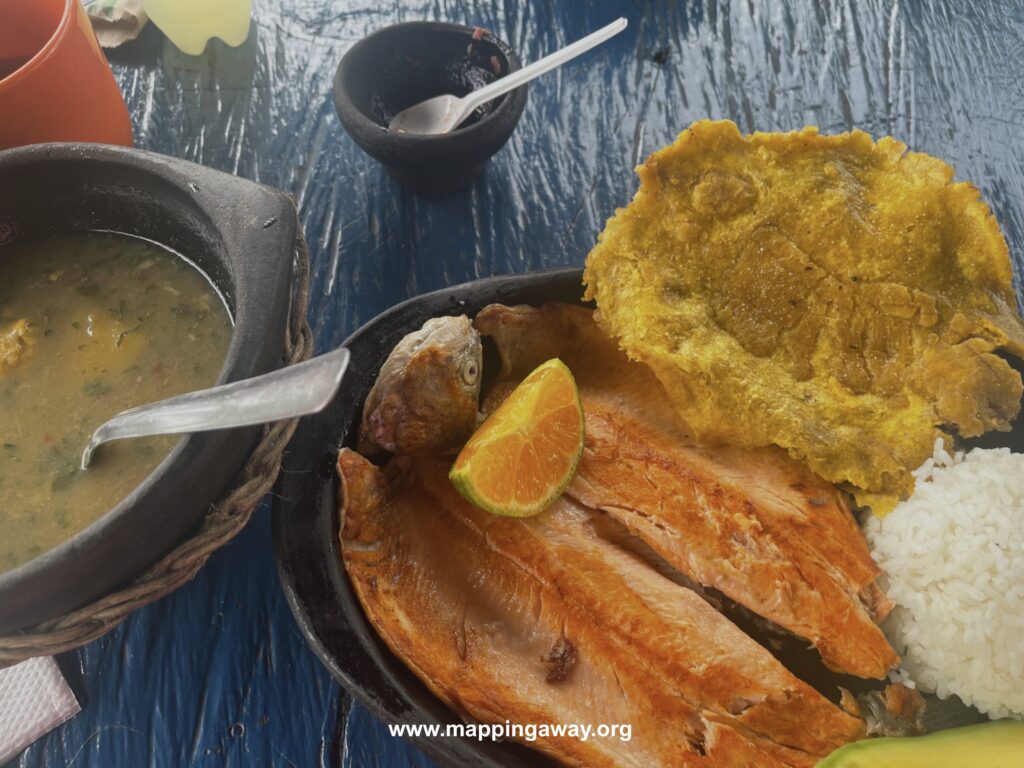
On the way back to Filandia, lunch at Café y Platano restaurante with an oven-baked trout and soup. Trout is a signature dish of the coffee region, and can be prepared grilled, baked, or served with garlic sauce. Spicy is what I missed the most. The owner served it with Ají sauce to add flavor to the taste buds. Not many restaurants or coffee shops on this road, or they are closed.
Pingback: 10-Day Scootering Colombia's Coffee Region: An Easy Guide | Mapping Away