
“En abril, flores mil y mil lluvias / In April, a thousand flowers and a thousand rains”
This post shares an easy looped scootering itinerary in the Andes Mountains of Colombia. This region is found to be easier to scoot in, as the elevation is less than 2,000 meters. As it is situated at a high elevation, the climate is suitable for coffee growing. This region is famous for the Coffee Triangle around the big cities Manizales, Pereira, and Armenia. It is also home to charming towns like Salento, Filandia, and Manizales. It’s known for coffee culture and the incredible diversity of coffee plants. Here, drinking coffee is practically the same as drinking water—it’s part of everyday life and impossible to live without.
April signals the start of the rainy season, especially in the Andes and the Amazon. Riding a scooter along the lush, forest-clad mountain roads, it is quickly realized that the landscape around is made up almost entirely of coffee farms. One of the best ways to experience the region is by going to coffee cupping and staying at a traditional coffee farmhouse, surrounded by rolling green hills and the aroma of fresh coffee.
April is the start of first Rainy Season. What do you need?
I bought an $8 set of scooter ponchos in the small town of Quimbaya. It came with a shoe cover, pants, and a poncho. It lasted till the end of my trip. I definitely recommend a whole set, unless you drive in sandals. Clothing and shoes don’t dry fast in the rainy season. Backpack covers are essentials. Rains just pour from the sky at 4 PM while driving on a highway. Sometimes it is lucky to find shelters.
Don’t forget to bring a pair of hiking/waterproof shoes, a rain jacket, extra shoes/ socks, and quick-dry clothing. During the rainy season, it is humid, and clothes don’t dry fast.
Where to rent a scooter/motorbike?
Rent a scooter from Motorental Col Eje Cafetero in Pereira. They offer both scooters and motorbikes for rent, at approximately $23 per day. The daily insurance costs slightly more. Contact them on WhatsApp for a reservation and pick it up on your arrival (+573506844348). The owner speaks English and is very helpful.
A Scooter for TWO Passengers
Kymco Agility 125 is a fuel-efficient scooter, and there is enough space for two people and two backpacks. It is easier to use the Bungee Cargo Net or elastic luggage rope to tie my bag to the back. The scooter rental does have these accessories for free. Bring a phone holder would be helpful. The rental charges a phone holder for a price per day.
Is Driving Safe in Colombia?
Pereira is a busy city with heavy traffic and a slightly complex highway system. In contrast, driving in Salento, Filandia, and Marsella and their surrounding areas is calm, low-traffic, easy to navigate, and drivers are generally courteous. The police stopped us once during a routine patrol. After showing our license, we were allowed to continue.
Can I Do It Solo? Do I need an International License?
Absolutely you can. As long as you could drive a scooter or motorbike. You do not need a international license to rent a scooter.
Carry Cash: I always exchange currencies in the airport, unless you find a better deal on the streets. ATMs are available in Salento and Filandia, and in big cities, but not in villages. Some individual farm lodges prefer cash.
How to get to Pereira?
Pereira is a growing, bustling city. It has an international airport, Aeropuerto Internacional Matecaña, and connects to all big cities by bus and flights. The bus takes about 8 hours for as low as $21. I took a bus from Medellin to Pereira in about six hours.
Itinerary
3 Days in Salento: Periera – Salento 37 kilometers
3 Days in Filandia: Salento to Filandia 21 kilometers
Day trip to Quimbaya: 17 kilometers
3 Days in Marsella: Filandia to Marsella 64 kilometers
Day Trip to Chinchina: 29 kilometers
1 Day in Periera: Marsella to Periera 33 kilometers
3 Days in Salento
Periera – Salento 37 kilometers
Explore Coffee Farms, Coffee Shops, and Coco Valley
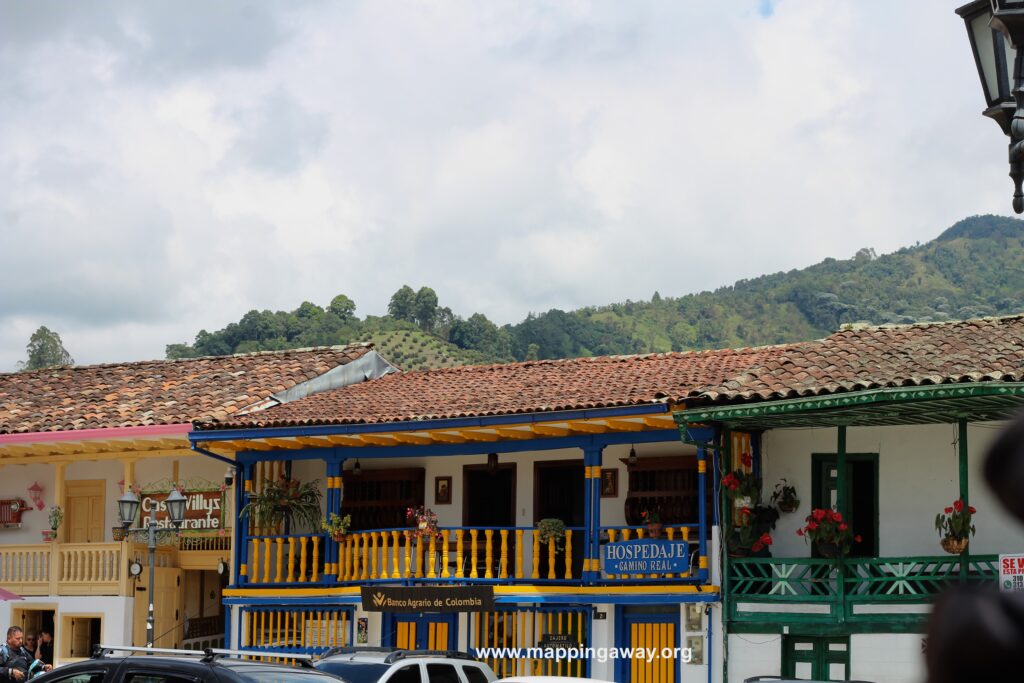
From Pereira to Salento is about 1 hour driving on Highway 29. It is a busy highway. Salento is a colorful, touristy town. It has many independently owned coffee shops serving a variety of beans from the area. The bustling square has parking spaces, where restaurants and ice cream parlors are found. When driving in the town, the brightly colored houses immediately caught the eye. Small coffee shops hidden in small alleys. It has supermarkets, restaurants, pharmacies, etc. Having a scooter means that I don’t have to stay in town. Many eco-guesthouses are outside of town. Jeep is a popular local transport, hop-on and off.
Where to stay?
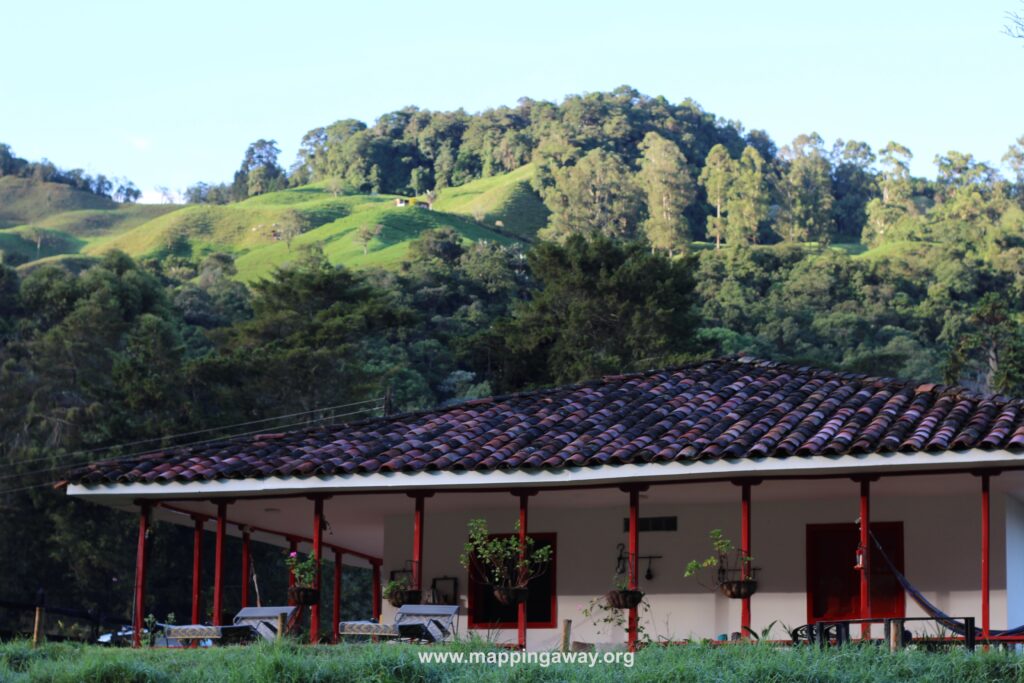
We stayed in La Cabaña Eco-Hotel ($60 – 76 / 2 pax) for 3 nights; it offers a comfy bed, a hot shower, and a heater. It has two properties: one is near the main quarter, and another is by the riverside – a short walk from the main house. It is in a convenient location, on the main road to Cocora Valley. Spacious common shared balcony, where games, books, and a sofa are, and it offers 24-hour tea, etc. Take a short walk to the roaring river and listen to the frogs croaking if you stay in the riverside bangalow. Conveniently, the ecolodge offers a Colombian menu for breakfast, lunch, and dinner. We had our delicious dinners here for 3 nights. This hotel is in a cattle ranch. View of the calves and cattle from the dining room, and the milkman in a sprung cart in the morning.
Short Hike
Hiking here is a bit tricky with highly concentrated land ownership. Cattle roam in the rolling hills, making it seem easy to reach the hilltop. After a night of rain, the streams glide calmly through the grass fields. The hotel manager will be able to guide you to the narrow entrance from another property to the entrance of the hill. The trail is muddy, wet, and tall grass over the trail. Spot the signboards that direct you to the back of the hotel property entrance. There is no clear trail once you enter someone’s property, but fenced properties after one another. A few with electrical shock, just be careful. This is the only hike I did not bring my hiking shoes. Fortunately, the hotel has a heater that was on for the whole night to dry my running shoes.
Half-Day Cocora Valley
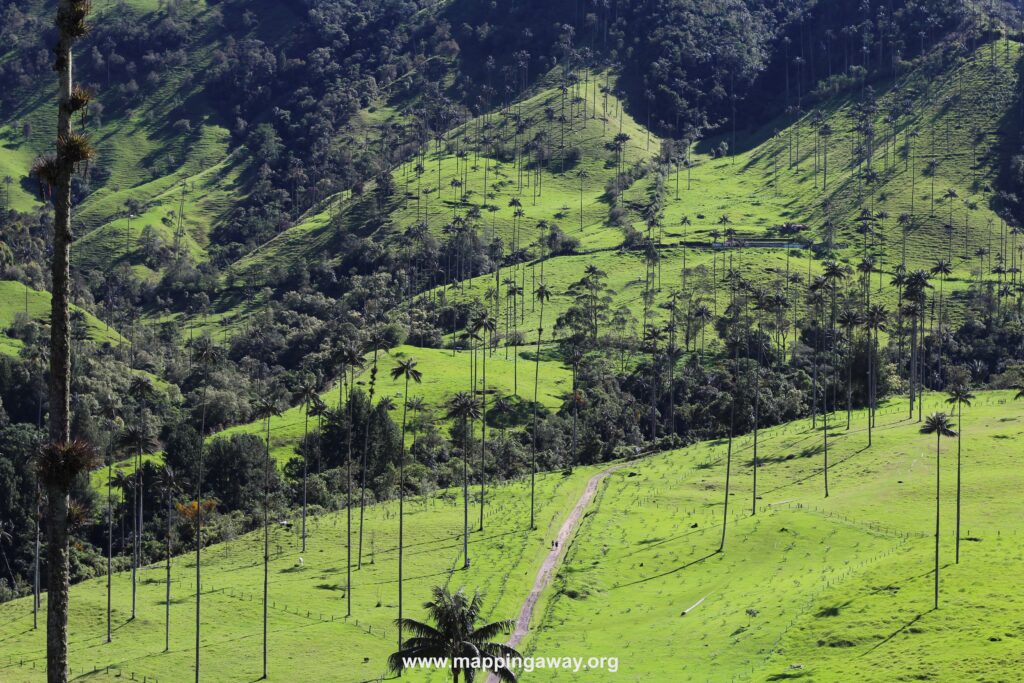
Cocora Valley combines surreal natural beauty with easy access for local and international travelers. After a night of rain, we are embraced by the sun as we drive toward the valley, a cool breeze brushing our faces. The paved road winds through private farms and is quiet in the early morning – only a few jeeps with tourists passed us. Cocora Valley is home to the tallest palm trees in the world, and standing beside them—hugging their narrow trunks—feels almost unreal. From the top of the hill, lush green hills stretch along the distant horizon, giving the place the feel of a natural theme park. In the morning, the valley is calm, and the horse caravans are ready to take the tourists to the hilltop. This is the best time to arrive before 10 AM to avoid the crowd.
The valley is easily accessible by scooter or jeep, and many hotels organize tours for solo travelers. Landowners have converted their land into parks and charge entrance fees, and there are several paid parking lots from 2,000 to 5,000 COP. There are several ways to explore the valley. If you are into long hikes, consider a 5-kilometer and a 12-kilometer looped trail. The trail is obvious and easily accessible. You have to pay at the entrance.
Coffee Farms Hopping
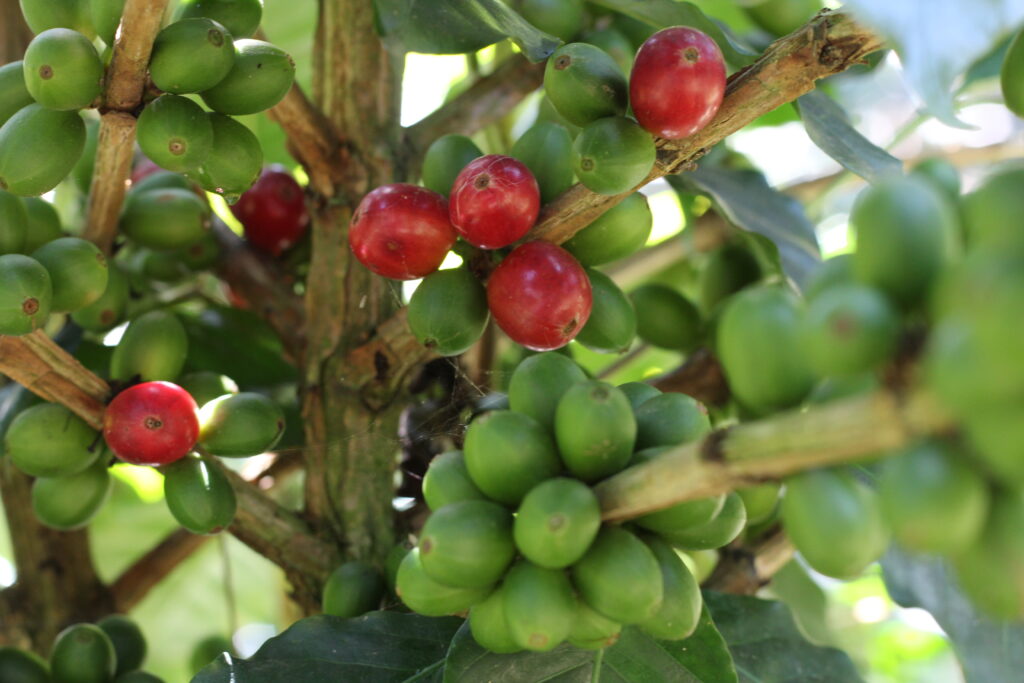
Coffee farms are on the outskirts of Salento. Salento’s coffee farms are easy to visit and provide a perfect day trip for travelers interested in culture and nature. It offers experience in rich coffee culture and local flavor. Many of them offer a coffee tour with a glimpse into how coffee is prepared from planting, picking, washing, drying, and roasting. The tour introduces a wide variety of coffee plants in Colombia and the varieties actually exported.
Coffee farmers are artists of their beans, and every one of them has a distinctive flavor or a hint of it. I would recommend visiting a big farm for more varieties and flavor, and small farms for artisan flavor. I bought one bag from each farm I visited. Roads to coffee farms are not always paved, some with high-grade downhill, making it a challenge to visit some faraway coffee farms. Driving on the Salento-Vda-Palestina road, coffee farm signboards are along the road. It is driven into many villages. My first stop is Las Acacias Coffee Farm. Two ways to sustain farming practice by all coffee farms are to offer coffee tours and coffee drinks. Nonetheless, enjoy a cup of espresso with a strong chocolate flavor and a hint of berry, while looking out at the coffee farm and banana trees. Ocaso Coffee House is a large coffee plantation in the Salento. It offers lodging, tours, and a coffee shop. On top of that, its coffee varieties are stunning, especially Geisha, originally from Ethiopia gained a strong hold in the area. Later, saw their coffee shop in the Plaza de Bolivar. I loved the natural process with a hint of fruitiness.
While in town…Coffee Hopping
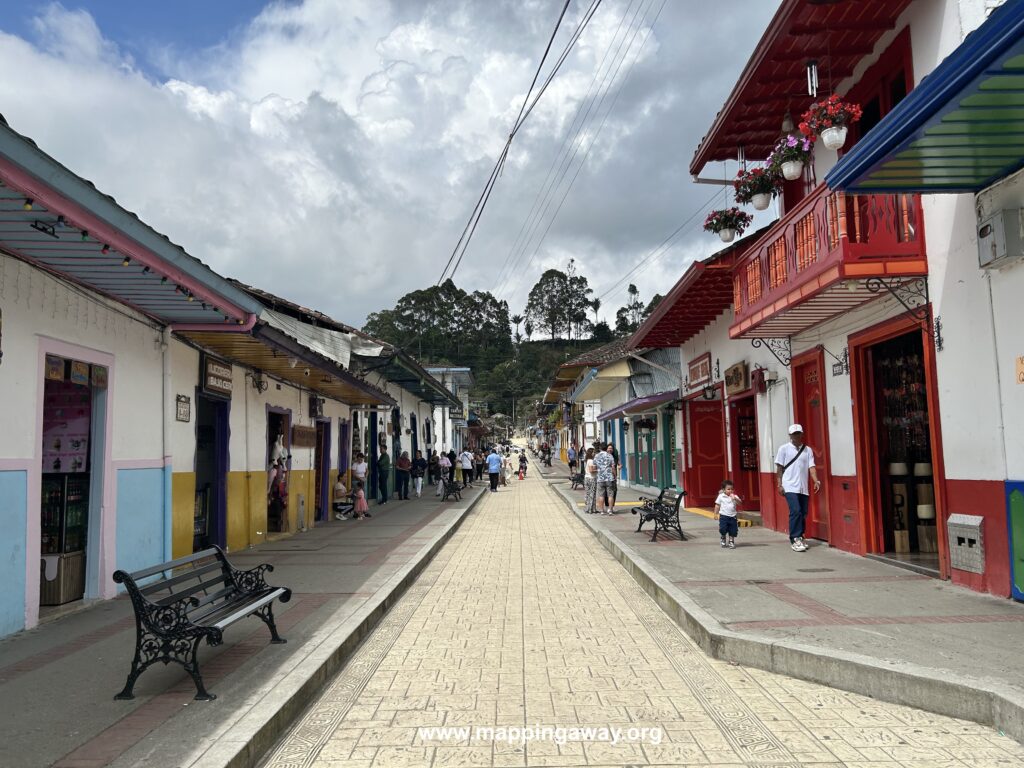
Every corner you turn in the Salento streets, there is a coffee shop with each has its unique flavor. While taking a scooter to Salento, many parking spaces are available in the Plaza de Bolivar or on the street for free. They are small and sometimes unique in their flavors. Kairos Coffee is a surprise find, offering a cozy environment with a few tables. Their menu includes food and drinks. A customer met there who loved their iced coffee, as he said that not many places serve it. I always go for espresso. Café Origenes Col is a local roastery that has an urban-sleek interior and hand-pour coffee. While enjoying a cup there, you slowly sink into the dense smell of coffee. While coffee hopping, it winds around the colorful houses and takes endless photos. Plaza de Bolivar is the central square in Salento, where you will take your final rest.
3 Days in Filandia
It’s only 28 KM from Salento to Filandia. It can be done on a day trip. We left for Filandia a little after breakfast. It is always at the back of mind to avoid afternoon rain. After Highway 29 takes the turn in Las Cruces, the 7.3 KM road to Filandia is bumpy. I found Filandia is quieter than Salento, which still has the vibe. The vibrant colors of buildings on every block make the two-color church in blue and white recognizable in the main plaza. The small town offers a few great gastronomic choices. We had lunch at “La Casa Rosada,” and I loved their Marranitas de Helena. It seems to be a popular dining place with an English menu. This is what I missed while not staying in town: a variety of food and enjoying the bustling town. This also means that we explore the surroundings of Filandia.
Itinerary
3 Days in Filandia: Salento to Filandia 21 kilometers
Day trip to Quimbaya: 17 kilometers
Where to stay?
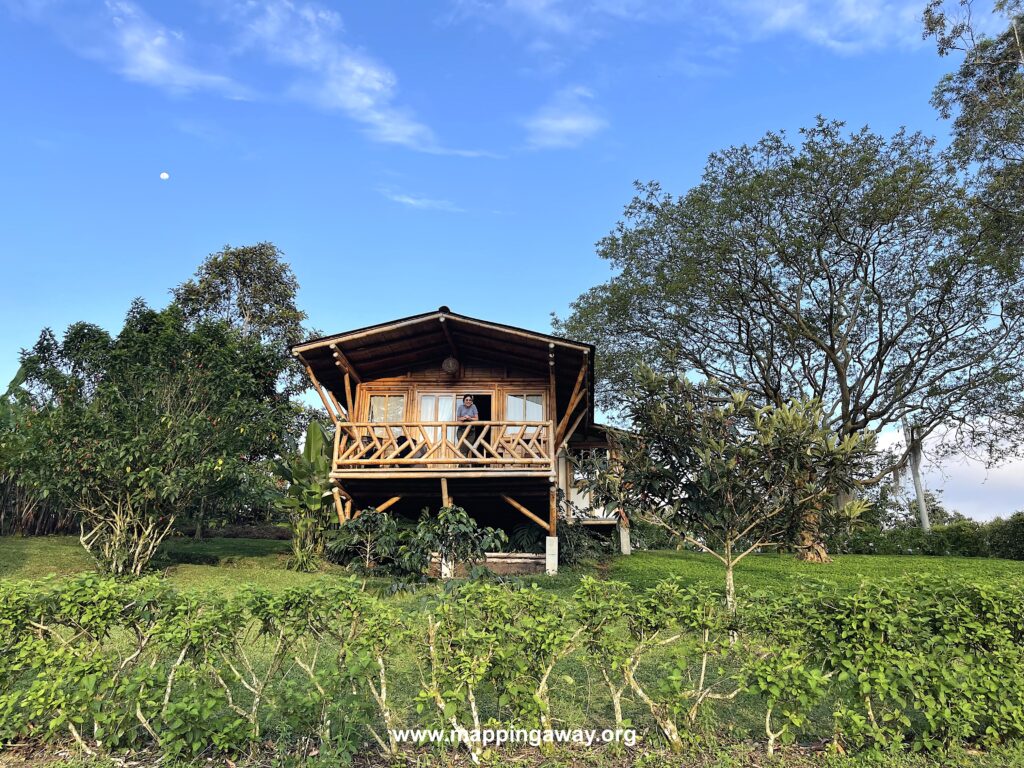
There are many budget guesthouses in town, as well as lodging in coffee farms. I am not worried about booking a week in advance. We reserve as we go. Casa Laureles, 5.7 KM from Filandia, is a well-maintained and simple coffee farm estate. The annex room with a balcony and a cabin is made out of bamboo. A bamboo garden is not far from the farm where the water stream flows. We stayed in the cabin for $240,000 COP per night / $63 USD. The owner, Gloria, prefers cash, and paying by card is subject to a transaction fee from the merchant. How do you make a reservation? WhatsApp is the best communication app to make a reservation. She is prompt at replying. Don’t forget to tell her if you prefer to have dinner.
Experience Local Farm
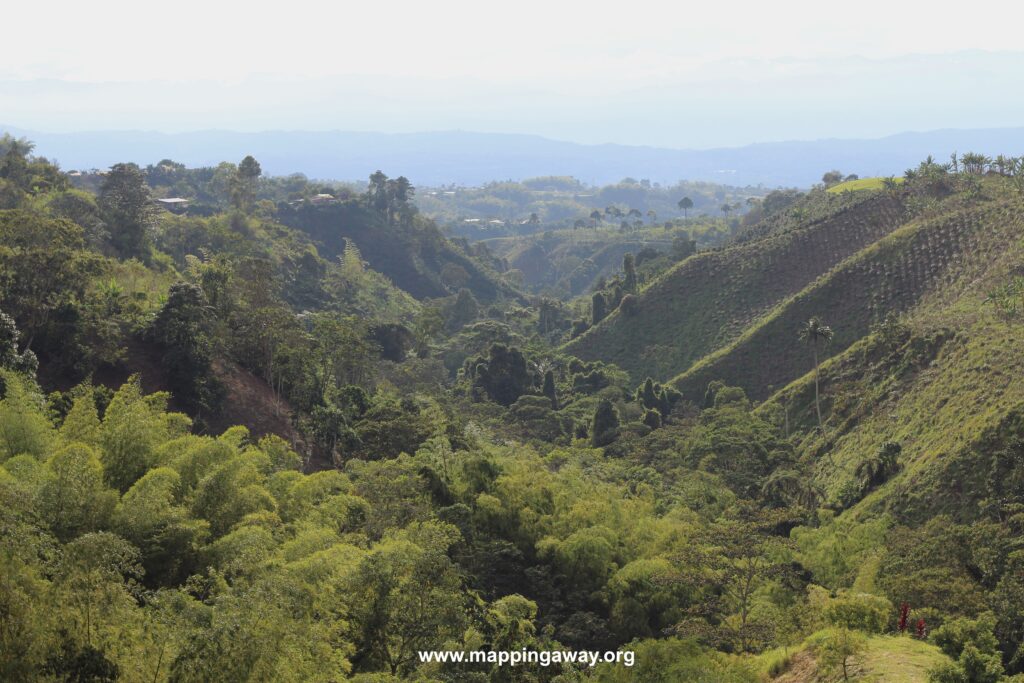
Staying in a farmhouse has given us the chance to quietly observe Colombian farming practices and sweeping landscapes. When being asked if the coffee gets exported, Gloria told us that it does not, only for the local market. Sipping morning coffee as we wander through the coffee plants perfectly captures the true farm-to-cup experience. The coffee is said to be organic and roasted at medium heat, with a hint of chocolate and fruit. It is common to spot cocoa trees, banana trees, and other fruit trees like guava around the farm. At the far end of the farm, a dense thicket grows in the gully separating the hills. On the horizon of rolling hills, the coffee plants dot the fields in perfect uniformity
The cabin is surrounded by the farm, flowers, and plants, which face the main road. Case Laureles, the third farmhouse at the end of the road, is in a secluded location where only birds, dogs, cows, and farming machines are heard. In the morning, waking up to the chirping of Yellow-headed Brushfinch, parrots, hummingbirds, and tanagers, etc. I am not an expert in bird-watching, so Merlin Bird ID helps identify birds, as Colombia has the greatest variety of birds on earth. The cabin has a small kitchen where you can prepare something simple. However, it does not have kitchen staples, like salt, oil, and pepper. The cabin balcony offers a lookout to the rolling hills while enjoying your coffee and breakfast.
It’s not the berry-picking season, yet bright red and yellow berries peek out from beneath the coffee leaves. Maintaining the farm is a daily chore. Workers are coming to the farm for daily maintenance, and on the other side of the hill, farmers have been cutting grass since the morning.
After breakfast
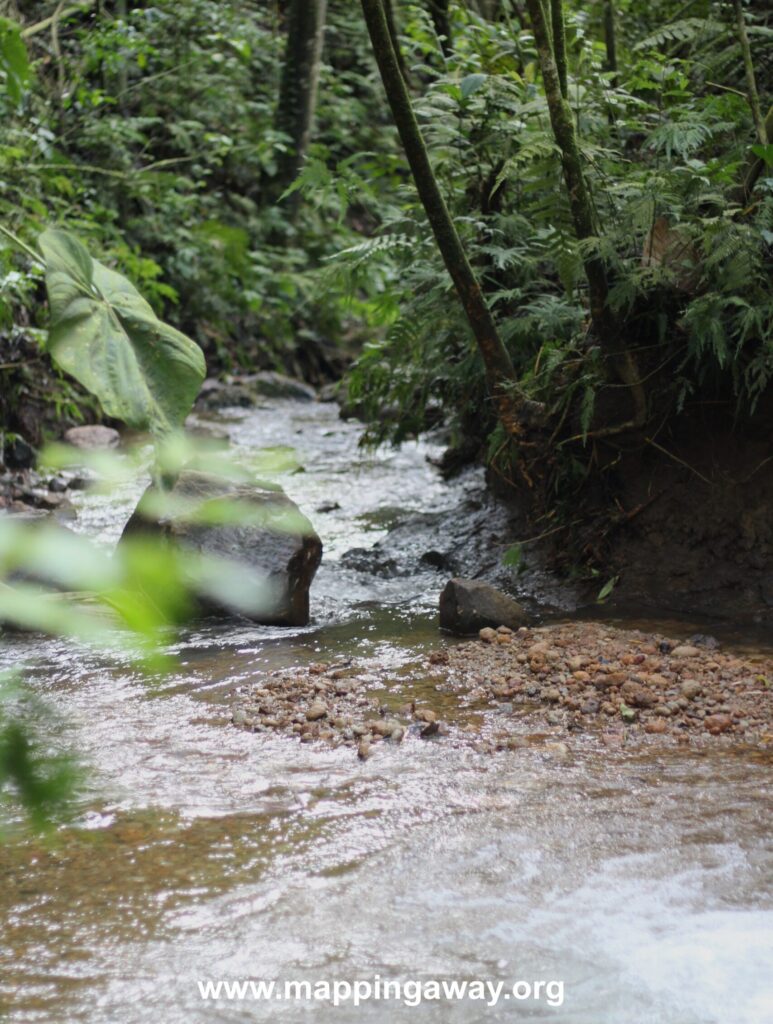
After breakfast, take a walk to the water stream and the bamboo garden. It’s a slow-flowing stream, but you can hear it calmly passing by the brushes.
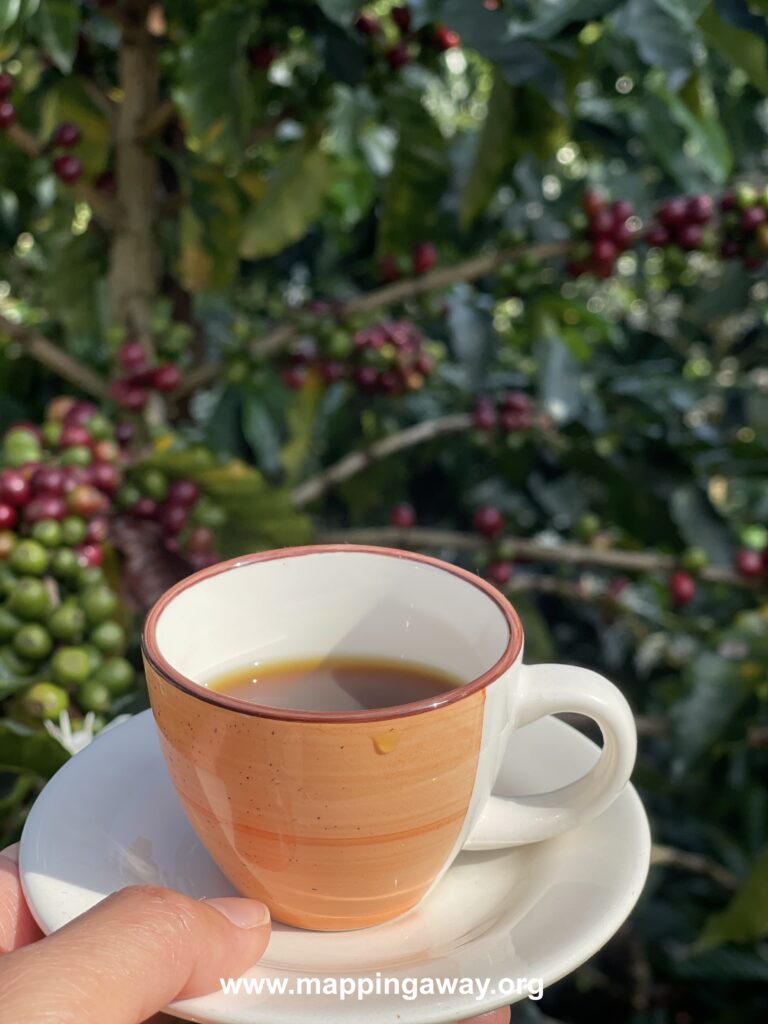
What to eat on the farm?
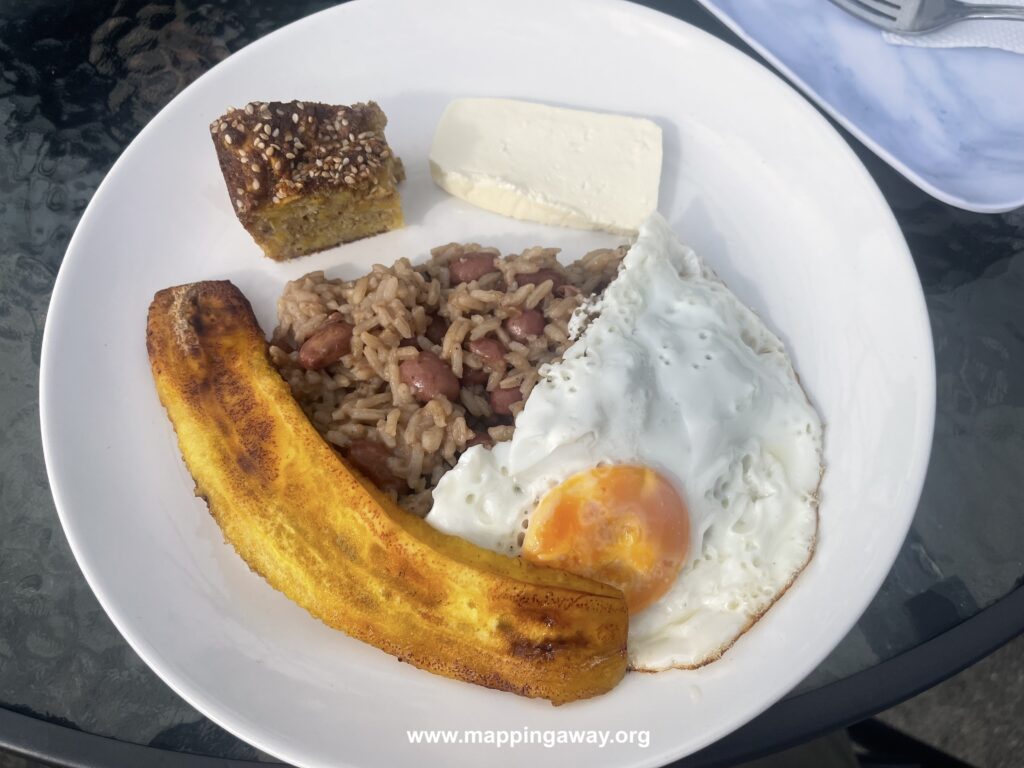
The farm serves breakfast and dinner, but dinner must be reserved earlier. The breakfast is simple, stable food that consists of eggs, sausage, rice, beans, and cheese. When your cup is empty, and you want another cup, ask Gloria, and she will happily refill it. Dinner is usually stir-fry vegetables, protein, and rice. It’s all prepared by Gloria and her helper.
Evening Walk
We don’t drive to town in the evening. It is beautiful to watch the sunset from the balcony and explore the neighborhood.
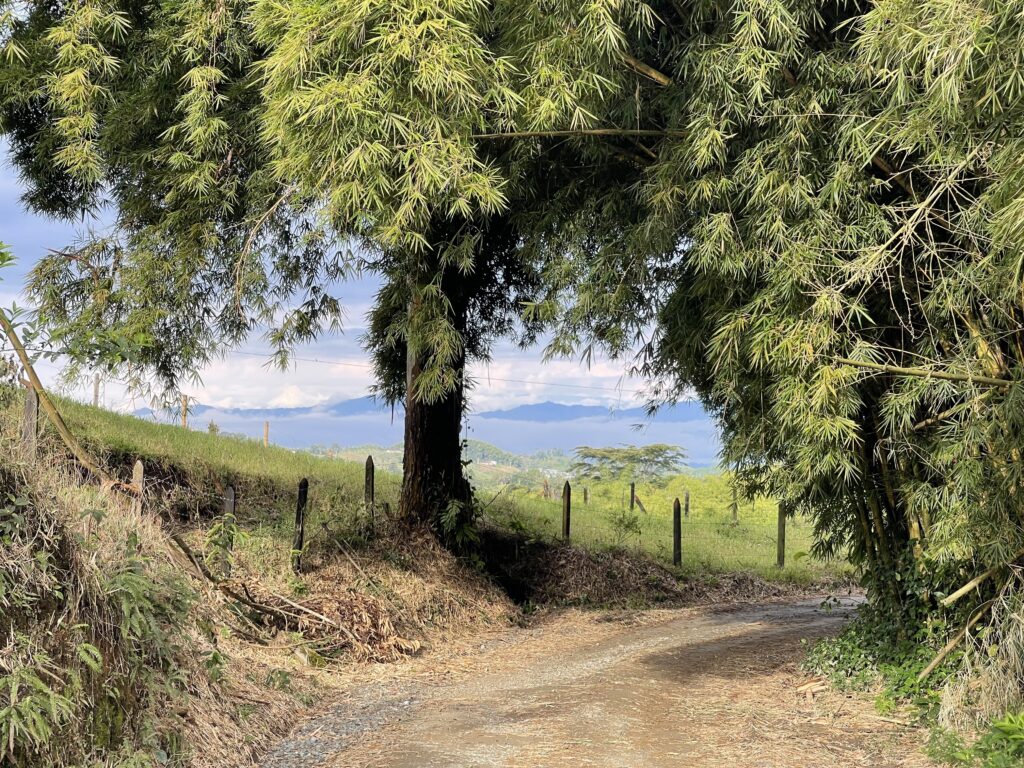
Filandia Town
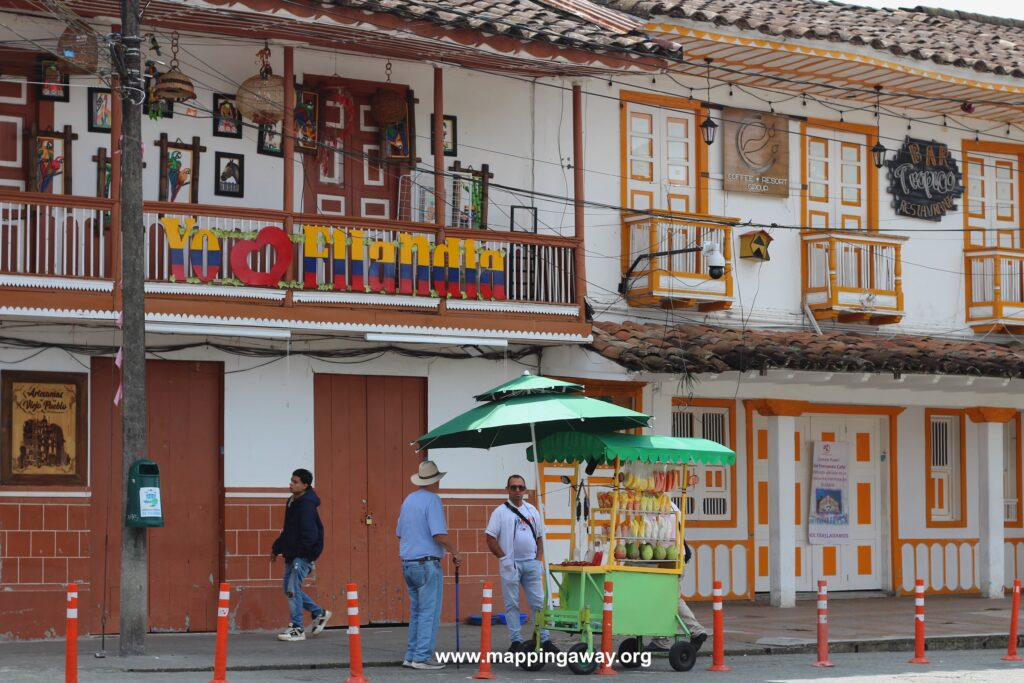
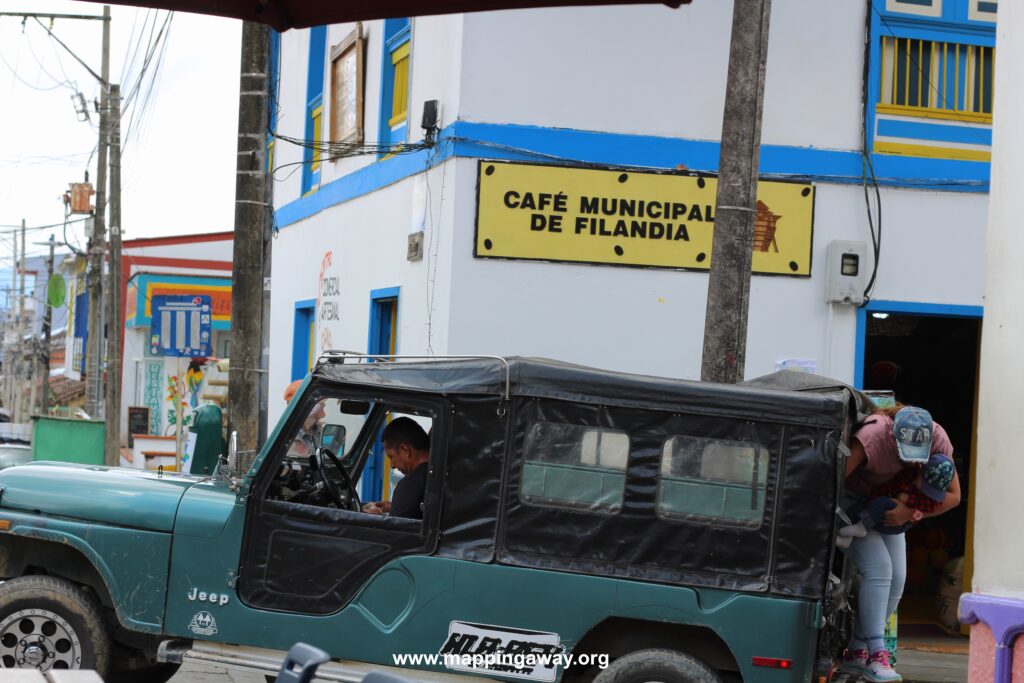
Filandia is pleasant to walk around in. The town is built on the hills, and the Mirador Colina Iluminada, a wooden tower, gives an overlook of the mountains. In the corner of the plaza, it is not possible to miss the bright logo of Café Municipal de Filandia. It carries a great selection of coffee from the region. Go in to smell a good variety of coffee beans and get a cup for 2,000 COP. This is an introduction to the coffee of the region. Many small and modern cafes in town, the best for coffee hopping.
Day Trip to Quimbaya
Day trip to Quimbaya: 17 kilometers
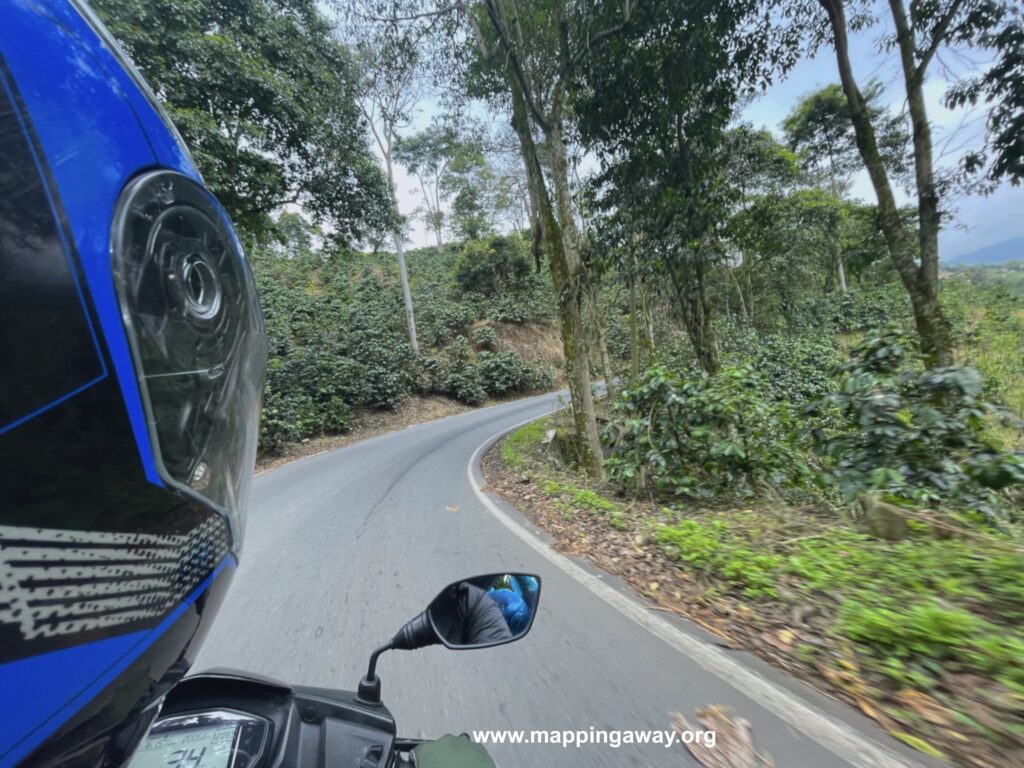
A day trip to nearby towns is usually less than an hour, passing by many small villages. Filandia to Quimbaya is about 23 KM through the hilly farms and ranches. This day trip is not about the destination, but about seeing the coffee region. Quimbaya is not a touristy town and is less vibrant than Salento and Filandia. However, it is still worth walking around the town and the plaza.
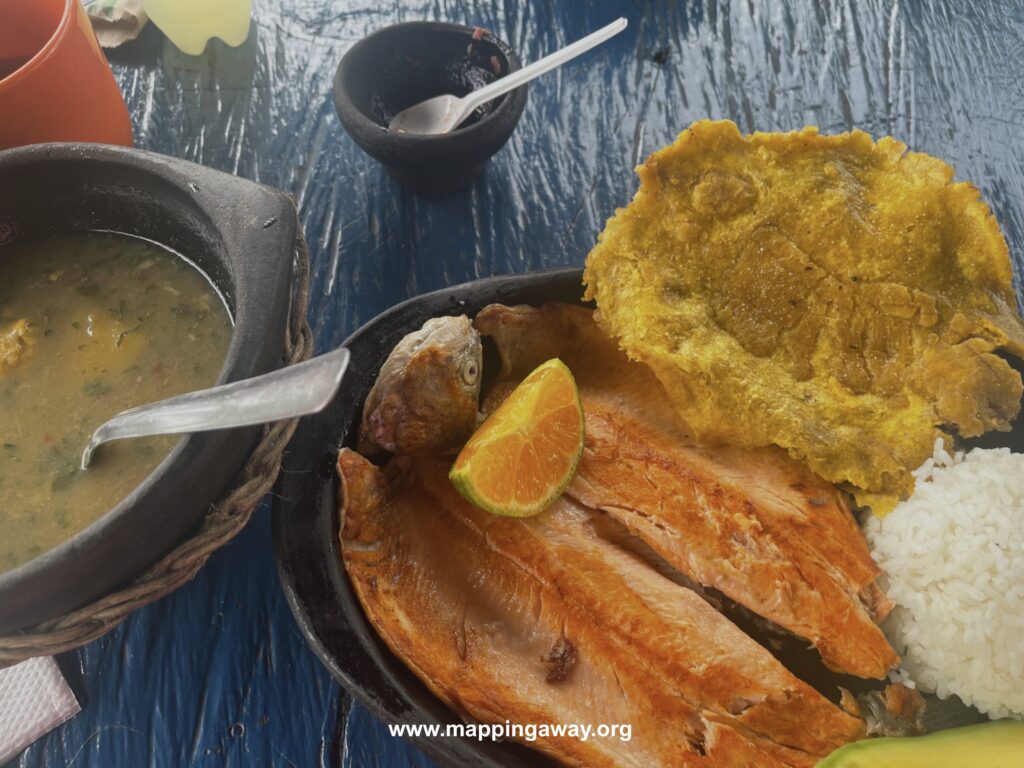
On the way back to Filandia, lunch at Café y Platano restaurante with an oven-baked trout and soup. Trout is a signature dish of the coffee region, and can be prepared grilled, baked, or served with garlic sauce. Spicy is what I missed the most. The owner served it with Ají sauce to add flavor to the taste buds. Not many restaurants or coffee shops on this road, or they are closed.
3 Days in Marsella
Filandia to Marsella 61 KM
Pereira to Marsella 30 KM
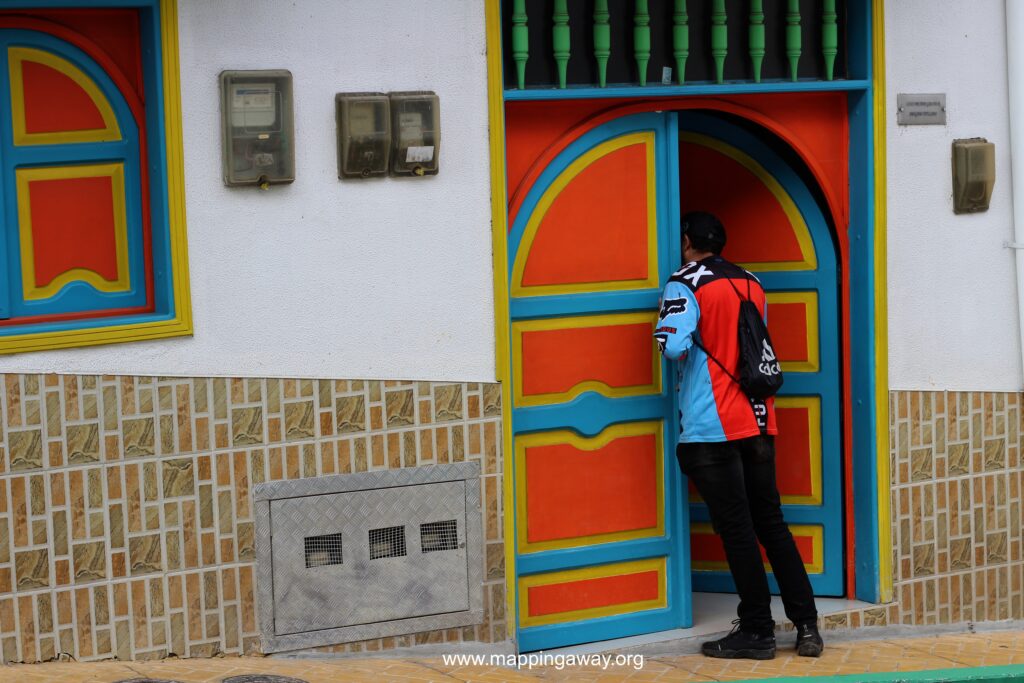
Marsella is known as the “Green Village” of Colombia, referring to its geographical location between the Andean forest and the tropical rainforest. It is known for a variety of flora and fauna. This itineary is part of a 10-Day Scootering Colombia’s Coffee Region trip. With a scooter, we get to explore the surroundings of Marsella and take a day trip to Chinchina. Marsella is on the other side of Pereira. It is 61 KM from Filandia, takes about 2 hours with pit stops. We have to route back to Pereira and take the Pereira-Marsella Highway. It is 30 KM from Pereira. Marsella is a quaint small town with bold shade buildings. Although it is a 30-minute drive from Pereira, it does not enjoy the tourist crowd like other coffee towns, Filandia and Salento.
Where to stay?: Eco hotel Los Lagos
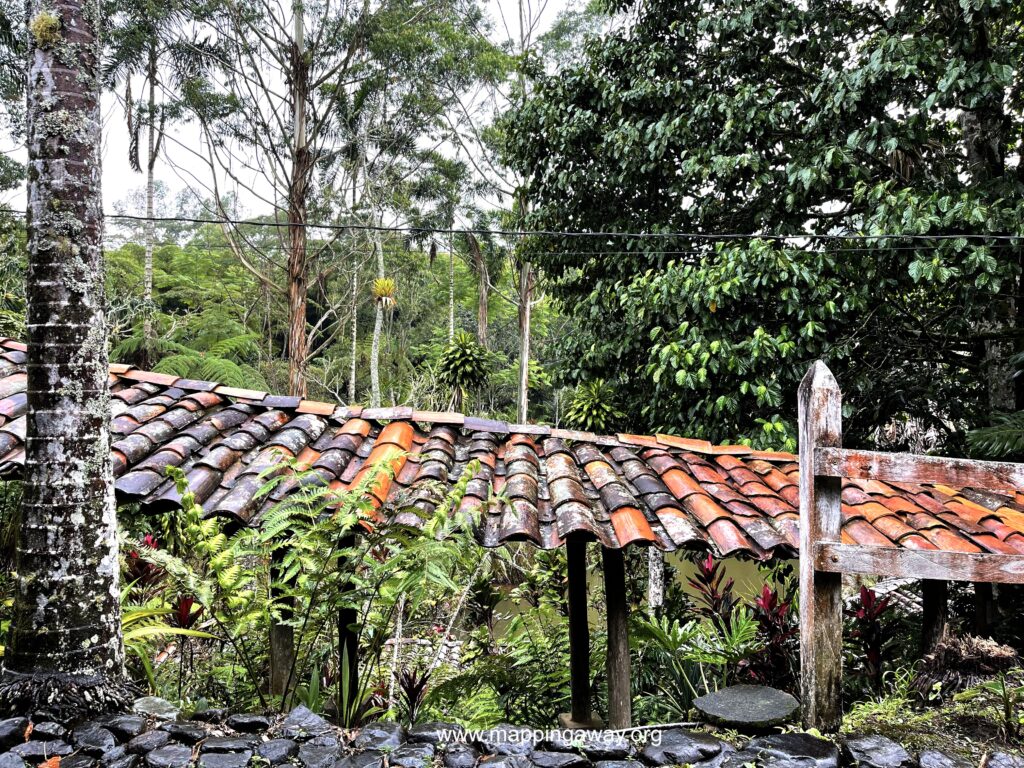
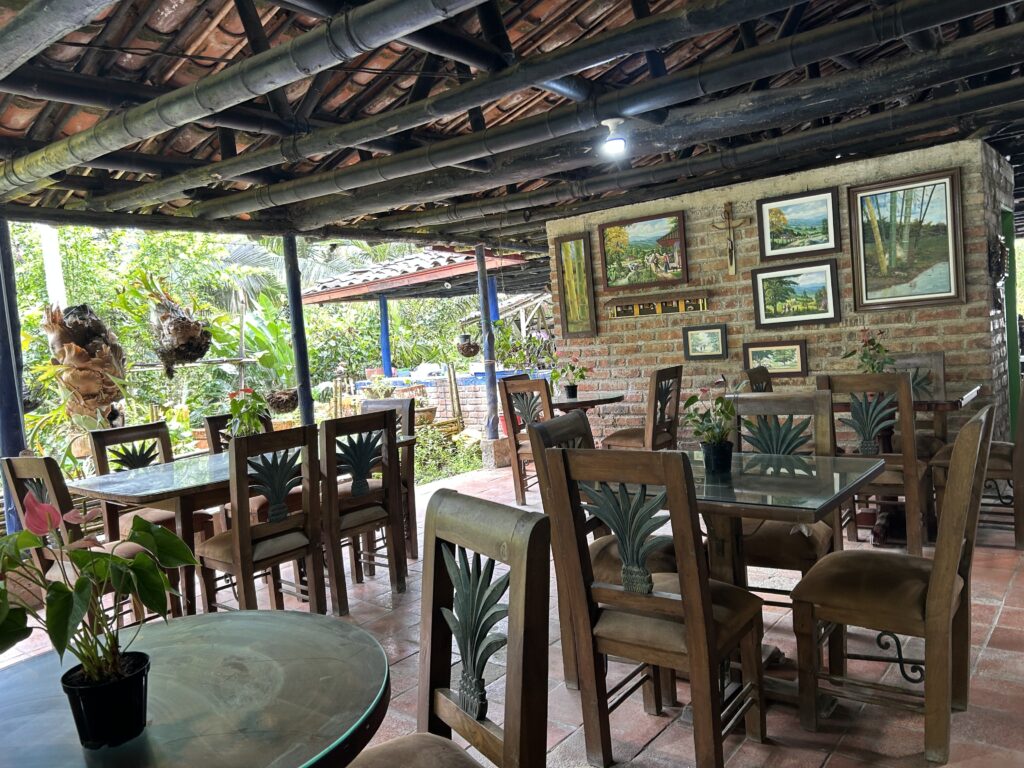
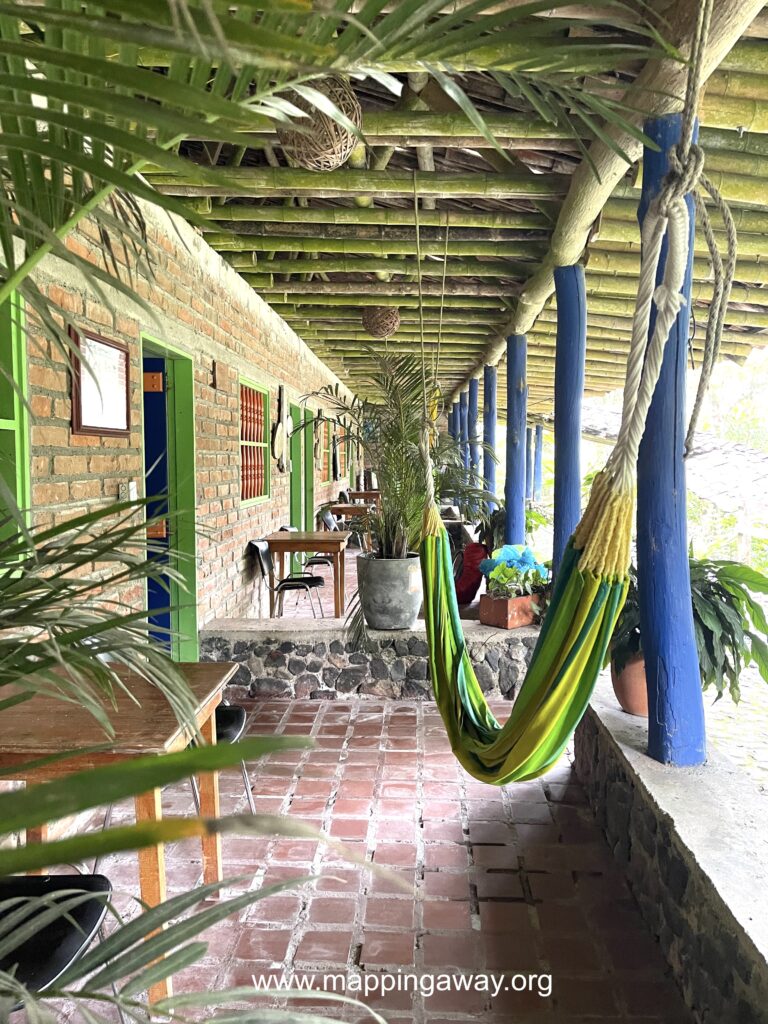
Located only 1.8 km from the town of Marsella, Los Lagos is a convenient place to stay. Los Lagos is a family-owned ecolodge that has been operating for more than three decades. The main house is where the kitchen, restaurant, and family living quarters are. Dinner is offered before 5 PM. After that, food delivery is available. It is said that they serve delicious food. I stayed in the upper quarter, about a 3-minute walk from the lake. It is clean and simple, with a TV and wifi. However, the hot shower does not work properly during my stay. It does not provide simple amenities such as shampoo, a wash, and a hair dryer. They have four dogs in the house as guards. They cannot recognize you at nighttime, and barking as a pack can be intimidating.
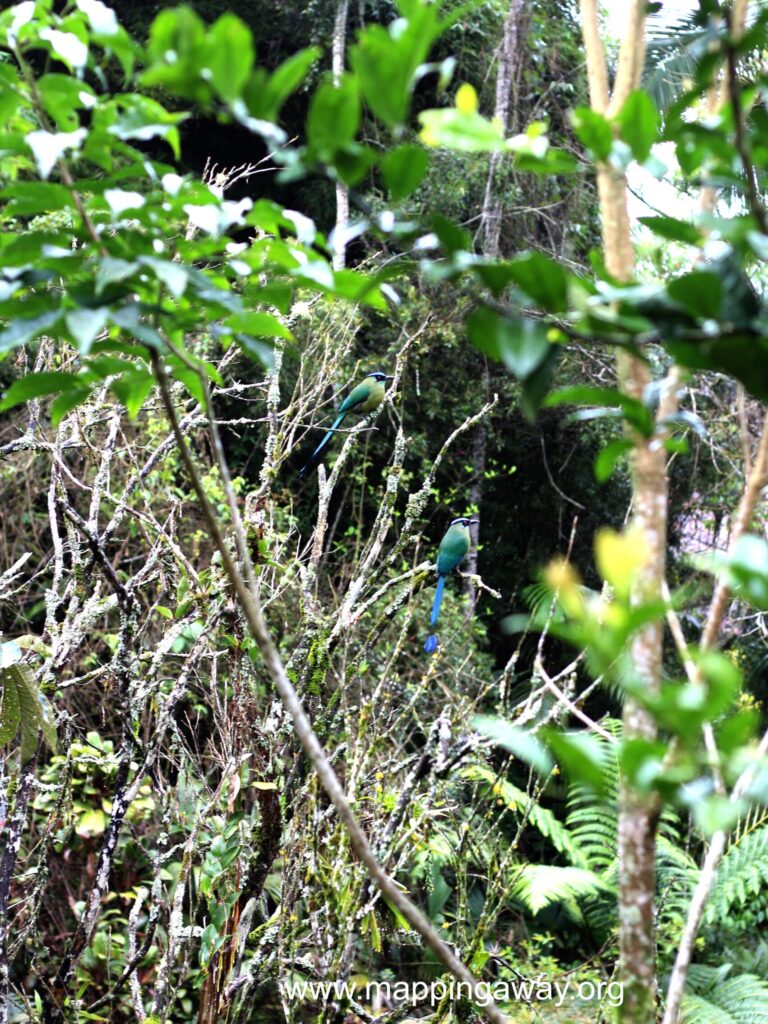
Andean Motmot !!
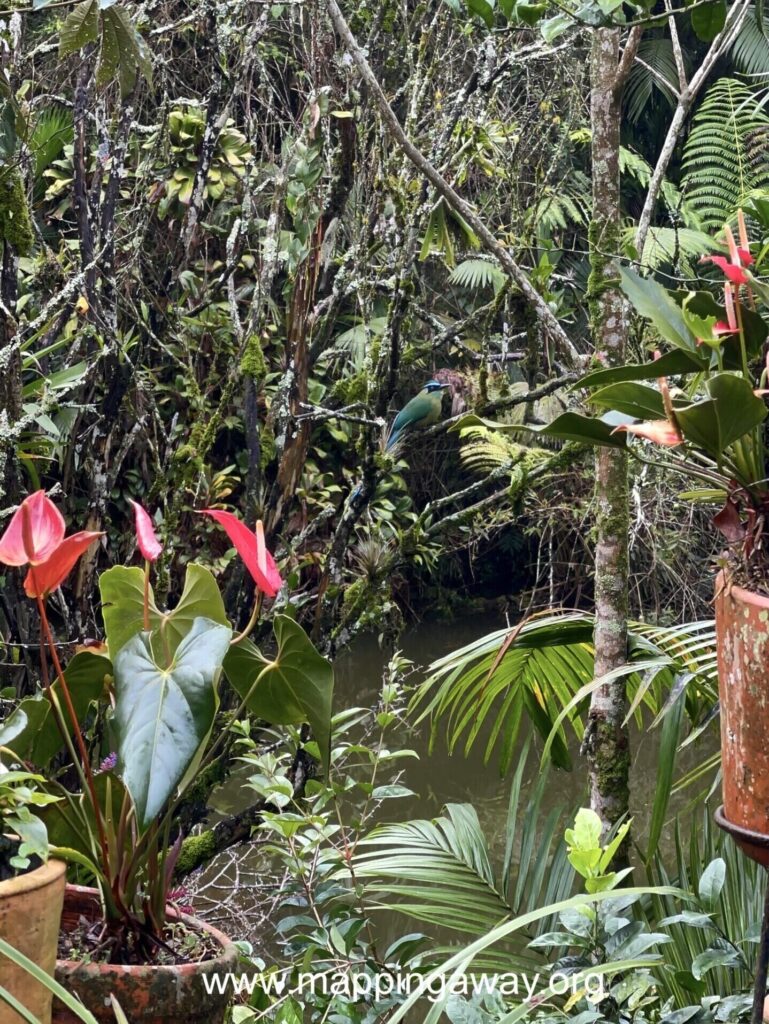
Having breakfast in the main house while watching colorful birds is a feast for the eyes and a wonderful way to start the morning. Feeder stations are commonly found in Colombia. The station is located near Los Lagos’ kitchen, which attracts a variety of colorful birds. Spotting the Andean motmot is exciting. It is identified with a distinctive and beautiful blue racket tail. It’s striking to spot two Andean motmots quietly perched on branches, their vibrant colors standing out against the forest but somehow blending in with the various greens.
Short Trail with Dogs
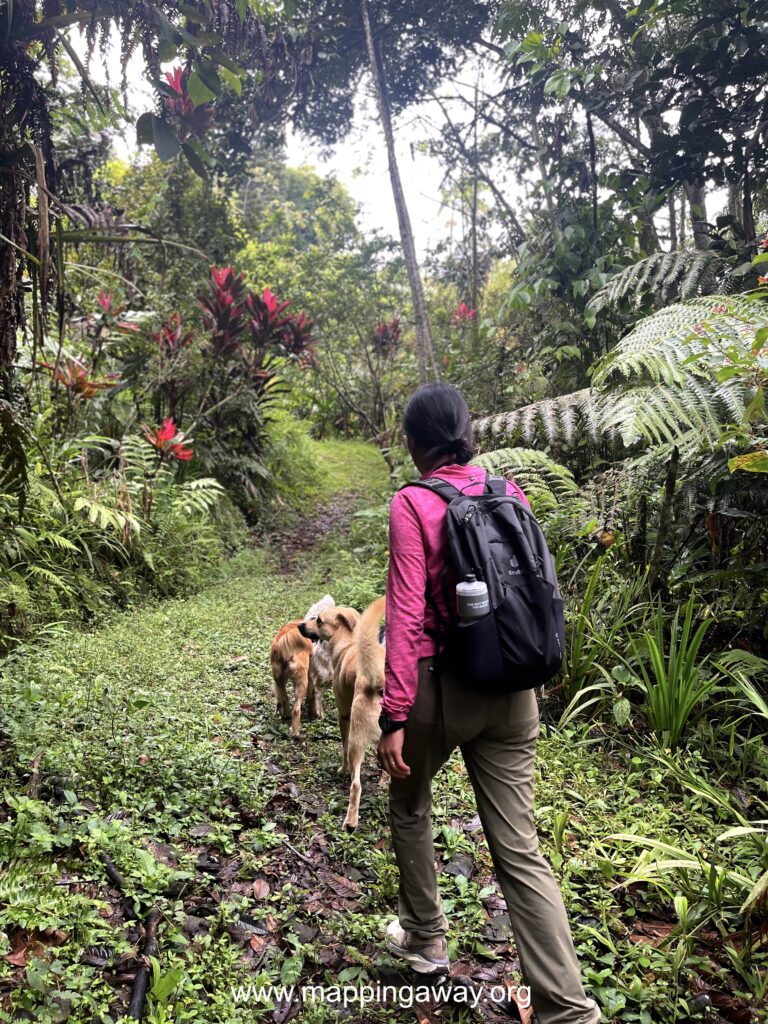
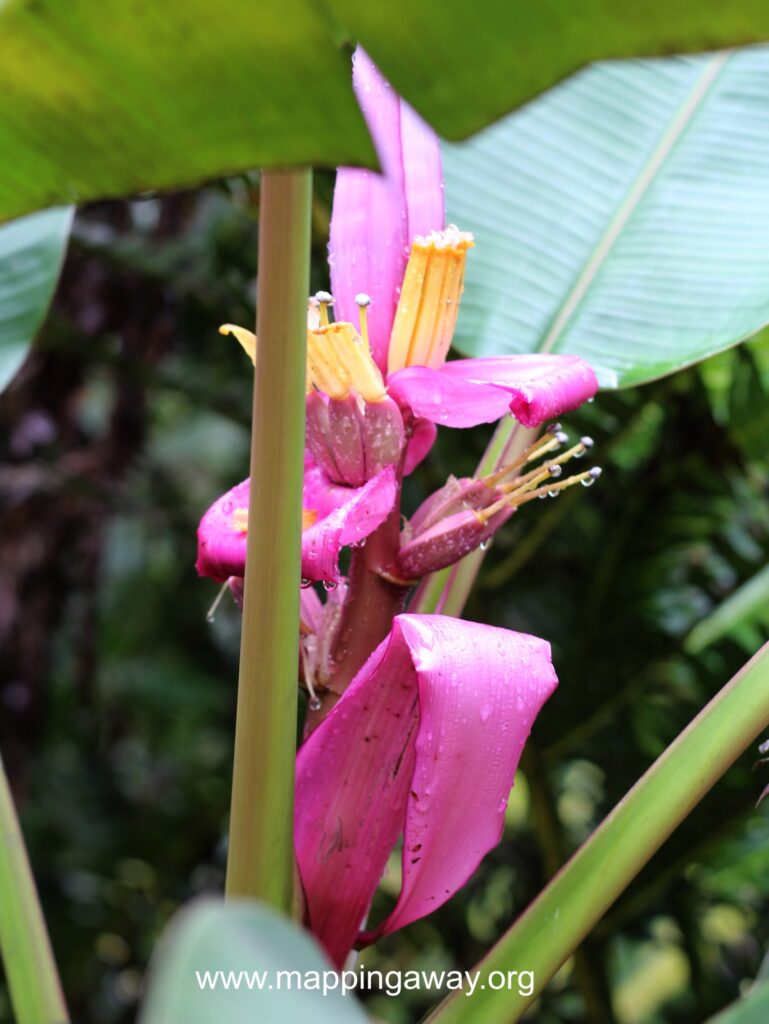
Short trails are created around the ecolodge. The owner’s restoration of former farmland appears to be contributing to an increase in biodiversity around the lodge. When we arrived, the rain finally stopped. The closest trail is a 2-minute walk from the main house. The dogs from the guesthouse are happy to guide you to short trails. They know their ways, but you should stay on your path :). It is a 30-minute easy trail for all ages. What you see in this trail is some common flora found in Colombia, such as Musa Velutina and the Colombian paradise plant. April marks the guava season; light-green, ripe guava hanging on the branch.
Baby Humming Birds
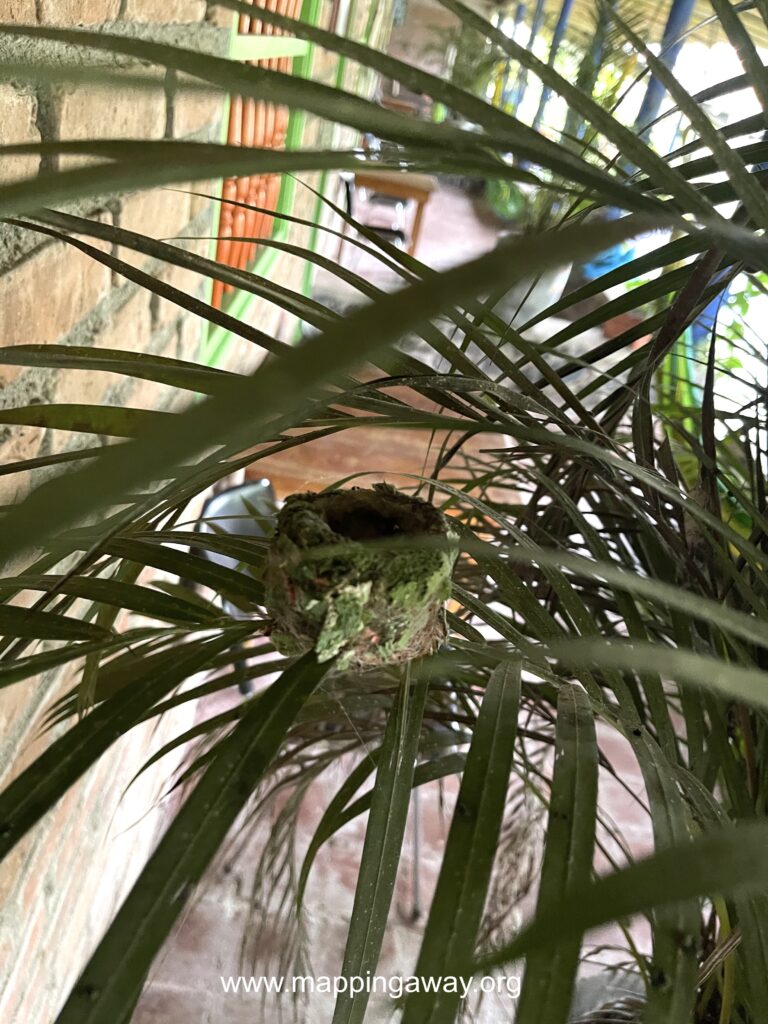
The staff showed us a hummingbird nest. It is just two rooms down from our room.
Marsella Town
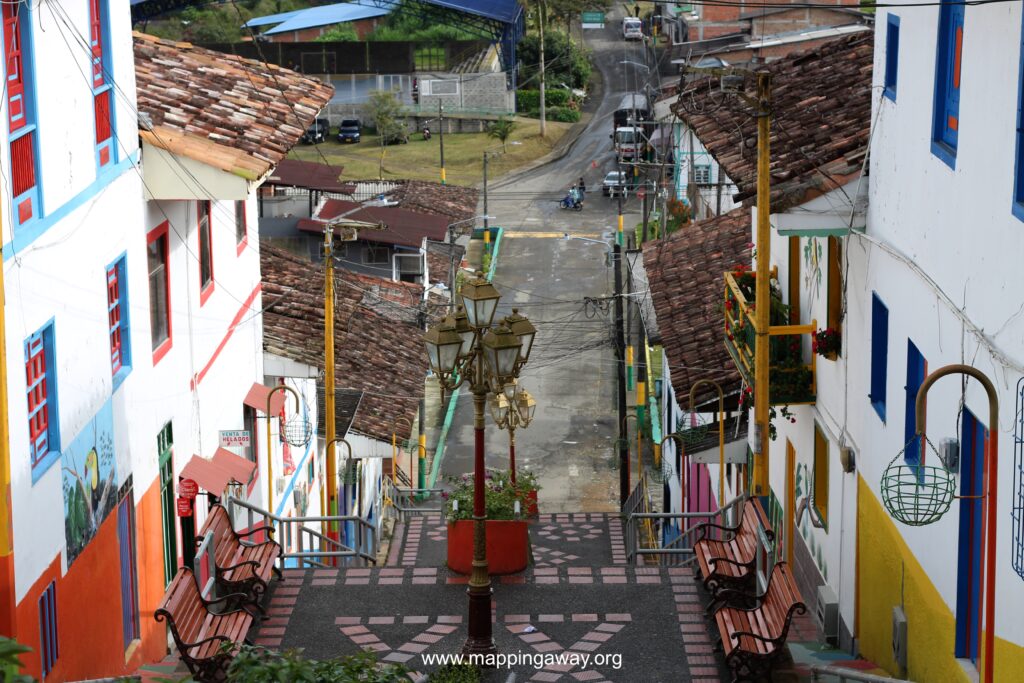
Built on a hill, Marsella reveals itself as you climb the stairs, appreciating the art along the way, until the church in the main square appears on the horizon. It turns a quaint town into a space of creativity. As stroll uphill to the square, you see buildings in Marsella are painted in vibrant colors. April is the month of holy week. The student band rehearses for the holy week parade. Another group carries the processional platform around the square. When it reaches 6 p.m., the square is slowly occupied with people. When you are in the square, enjoy a cup of coffee at Artesanias Marsella.
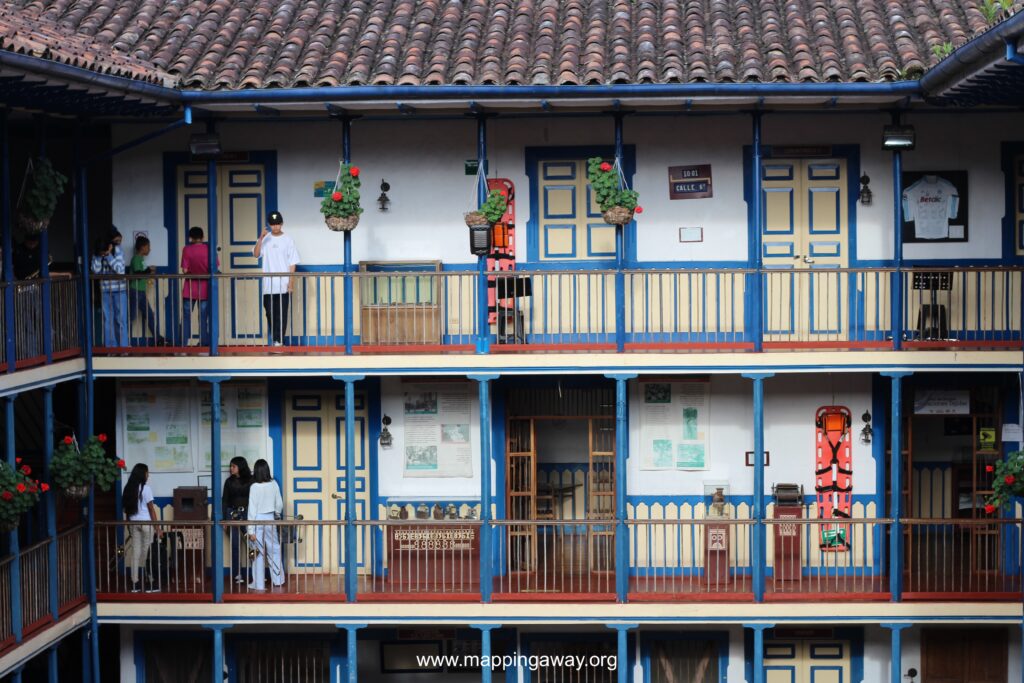
Casa de la Cultura
Casa de la Cultura is worth visiting as it is a symbol of Risaralda’s cultural and architectural identity, and is open to everyone at no cost. It was built in the 20th century, with a large central open space courtyard that brought light into the rectangular-shaped hallway. This building hosted the Municipal Public Library and the exhibition halls. Cultural activities are in the courtyard. Walking from room to room, century-old artifacts can be seen displayed in the hallway or inside the room. At the time of visiting, students attend musical instrument classes and have fun in the courtyard.
Artesanias Colibrí
Artesanias Colibrí is the surprise gem. It is located in the corner of the plaza. An ocean-blue and yellow door frame, reminiscent of the Colombian flag, draws the eye, as does a vibrant hummingbird painted on the wall. It carries a variety of Colombian craft products: hats, straw-made handbags, cooking utensils, and baskets. The owner is friendly and patient in answering questions.
Day Trip to Chinchina
Marsella to Chinchia: 29 KM
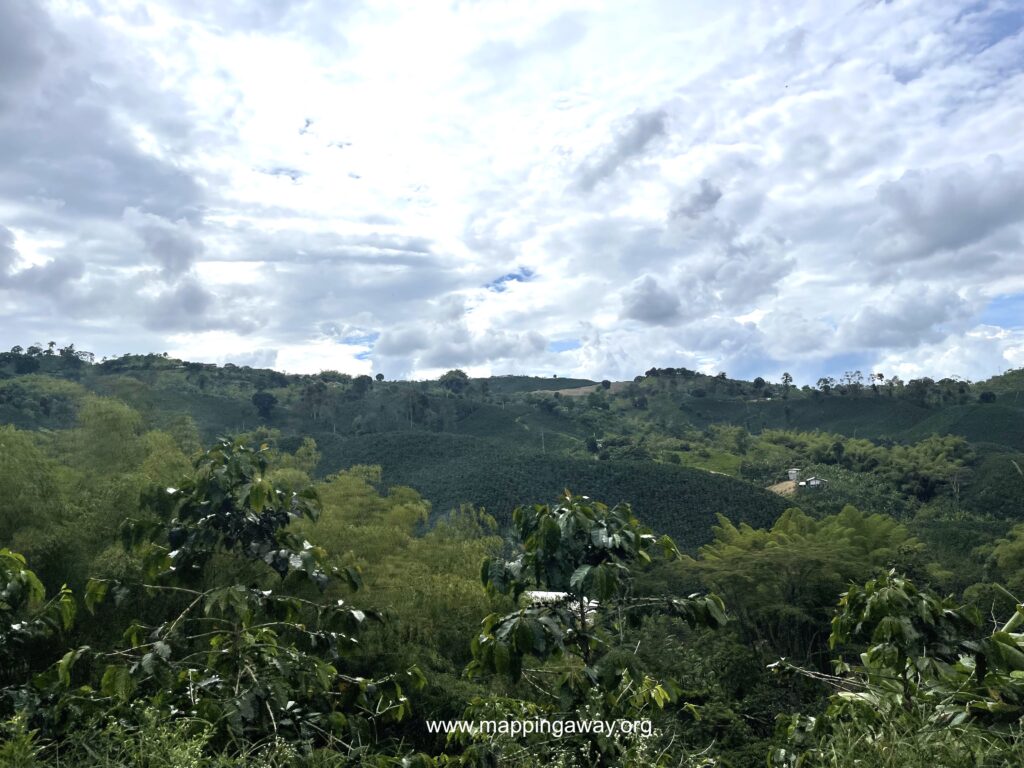
The ride from Marsella to Chinchina is scenic, as Marsella’s surroundings are coffee farms and farmhouses. Chinchina is home to Buendía coffee factory and Cenicafé, a coffee research center. A large coffee mug is in the square. It signifies the importance of coffee culture in this town. Many interesting coffee shops around this town, and a collection of Chinchina coffee. Café Al Parque is in the square, carries a variety of coffee beans from the surrounding “finca” coffee farms. I bought two with a fruity flavor. Café Tales and Coffee Roasting are also worthwhile to visit.
Pingback: 3 Days in Salento, Colombia | Mapping Away
Pingback: 3 Days in Filandia | Mapping Away